
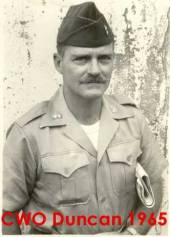
From
Josh Duncan
Updated
10/31/04
Thank You, Josh! This is a
great update. Read on and enjoy, folks! DebV
Salute
Update
I am writing this as a soldier that went
to Vietnam three(3) times. We do not need to put up with the traitors in
our country. If we do, in 5 years we will be a third world country.
There will be a World Government in which no vote of ours will count, and we
will not sit on the decision making bench.
If you can read this, thank a teacher....
If you are reading it in English, thank a
soldier.
Josh
This letter was written by Lt. Kevin
Brown, USMC, a Marine Cobra pilot and 2001 graduate of the United States Naval
Academy. He expresses a basic thought that is becoming a common thread in
emails sent by those serving in Iraq.
Those who are serving there are smart enough to detect a basic fallacy in the
words of many. Simply stated, one cannot say that one is supporting the troops
in Iraq while saying that one does not support what they are doing.
In the words of Lieutenant Brown, "you cannot both support the troops and
protest their mission".
What they see coming is another version of Vietnam...eventually the charade
will be played to its natural conclusion and neither the troops nor what they
are doing will be supported. With the rug pulled out, they will then become a
latter day version of the Vietnam Veteran. Those who had the Vietnam experience
know exactly what I mean. It is our duty to do our best to make certain that it
doesn't happen to our successors.
Which, of course, is why this email, one that was provided by a major
retired Marine circuit, is forwarded to so many.
What they are also seeing is that a large segment of the public has forgotten
who attacked whom on 9/11 and who suffered more casualties that day than were
suffered on 7 December 1941. Dad, you asked me what I would say to America from
Iraq on 9/11 if I had a podium and a microphone. I have thought about it, and
here is my response.
Your Son,
Kevin
September 11, 2004 Dear America, "People sleep peaceably in their beds at
night only because rough men stand ready to do violence on their behalf."
-George Orwell
The Marine Corps is tired. I guess I
should not say that, as I have no authority or responsibility to speak for the
Marine Corps as a whole, and my opinions are mine alone. I will rephrase: this
Marine is tired. I write this piece from the sands of Iraq, west of Baghdad, at
three a.m., but I am not tired of the sand. I am neither tired of long days,
nor of flying and fighting. I am not tired of the food, though it does not
taste quite right. I am not tired of the heat; I am not tried of the mortars that
occasionally fall on my base. I am not tired of Marines dying, though all
Marines, past and present, mourn the loss of every brother and sister that is
killed; death is a part of combat and every warrior knows that going into
battle. One dead Marine is too many, but we give more than we take, and unlike
our enemies, we fight with honor. I am not tired of the missions or the people;
I have only been here a month, after all. I am, however, tired of the hypocrisy
and short-sightedness that seems to have gripped so many of my countrymen and
the media. I am tired of political rhetoric that misses the point, and mostly I
am tired of people "not getting it."
Three years ago I was sitting in a classroom at Quantico, Virginia, while
attending the Marine Corps Basic Officer Course, learning about the finer
points of land navigation. Our Commanding Officer interrupted the class to
inform us that some planes had crashed in New York and Washington D.C., and
that he would return when he knew more. Tears welled in the eyes of the
Lieutenant on my right while class continued, albeit with an audience that was
not very focused; his sister lived in New York and worked at the World Trade
Center. We broke for lunch, though instead of going to the chow hall proceeded
to a small pizza and sub joint which had a television. Slices of pizza sat cold
in front of us as we watched the same vivid images that you watched on
September 11, 2001.
I look back on that moment now and realize even then I grasped, at some level,
that the events of that day would alter both my military career and my country
forever. Though I did not know that three years later, to the day, I would be
flying combat missions in Iraq as an AH-1W Super Cobra pilot, I did understand
that a war had just begun, on television for the world to see, and that my
classmates and I would fight that war.
After lunch we were told to go to our rooms, clean our weapons and pack
our gear for possible deployment to the Pentagon to augment perimeter security.
The parting words of the order were to make sure we packed
gloves, in case we had to handle bodies.
The first Marine killed in Operation Iraqi Freedom was in my company at The
Basic School, and was sitting in that land navigation class on September 11. He
fought bravely, led from the front, and was killed seizing an oil refinery on
the opening day of the war. His heroism made my emergency procedure
memorization for the T-34 primary flight school trainer seem quite
insignificant. This feeling of frustration was shared by all of the student
pilots, but we continued to press on. As one instructor pointed out to us,
"You will fight this war, not me. Make sure that you are prepared when you
get there." He was right; my classmates from Pensacola are here beside me,
flying every day in support of the Marines on the ground. That instructor has
since retired, but I believe he has retired knowing that he made a contribution
to the greatest country in the history of the world, the United States of
America.
Many of you will read that statement and balk at its apparently presumptuous
and arrogant nature, and perhaps be tempted to stop reading right here. I would
ask that you keep going, for I did not say that Americans are better than
anyone else, for I do not believe that to be the case. I did not say that our
country, its leaders, military or intelligence services are perfect or have
never made mistakes, because throughout history they have, and will continue to
do so, despite their best efforts. The Nation is more than the sum of its citizens
and leaders, more than its history, present, or future; a nation has
contemporary values which change as its leaders change, but it also has
timeless character, ideals forged with the blood and courage of patriots. To
quote the Pledge of Allegiance, our nation was founded "under God,
indivisible, with liberty and justice for all." As Americans, we have more
freedom than we can handle sometimes.
If you are an atheist you might have a problem with that whole "under
God" part; if you are against liberating the people of Iraq, Afghanistan,
Asia, all of Europe (twice), and the former Soviet bloc, then perhaps the
"liberty and justice for all" section might leave you fuming. Our
Nation, throughout its history, has watered the seeds of democracy on many continents,
with blood, even when the country was in disagreement about those decisions.
Disagreement is a wonderful thing. To disagree with your neighbors and your
government is at the very heart of freedom. Citizens have disagreed about every
important and controversial decision made by their leaders throughout history.
Truman had the courage to drop two nuclear weapons in order to end the largest
war in history, and then, by his actions, prevented the Soviets from
extinguishing the light of democracy in Eastern Europe, Berlin. Lincoln
preserved our country through civil war; Reagan knew in his heart that freedom
is a more powerful weapon than oppression.
Leaders are paid to make difficult,
sometimes controversial decisions. History will judge the success of their
actions and the purity of their intent in a way that is impossible at the
present moment. In your disagreement and debate about the current conflict,
however, be very careful that you do not jeopardize your nation or those who
serve. The best time to use your freedom of speech to debate difficult
decisions is before they are made, not when the lives of your countrymen are on
the line.
Cherish your civil rights; I know that after having been in Iraq for only one
month I have a new appreciation for mine. You have the right to say that you
"support the troops" but oppose the war in Iraq and Afghanistan. You
have the right to vote for Senator John Kerry because you believe that he has
an exit strategy for Iraq, or because you just cannot stand President Bush. You
have the right to vote for President George W. Bush if you believe that he has
done a good job over the last four years. You might even decide that you do not
want to vote at all and would rather avoid the issues as much as possible. That
is certainly your option, and doing nothing is the only option for many people
in this world.
It is not my place, nor am I allowed by the Uniformed Code of Military Justice,
to tell you how to vote. But I can explain to you the truth about what is going
on around you. We know, and have known from the beginning, that the ultimate
success or failure of the war in Iraq and Afghanistan, as well as the future of
those countries, rests solely on the shoulders of the Iraqi and Afghani people.
If someone complains that we should not have gone to war with Saddam Hussein,
that our intelligence was bad, that President Bush's motives were impure, then take
the appropriate action. Exercise your right to vote for Senator Kerry, but
please stop complaining about something that happened over a year ago. The
decision to deploy our military in Iraq and Afghanistan is in the past, and
while I believe that it is important to the democratic process for our nation
to analyze the decisions of our leadership in order to avoid repeating
mistakes, it is far more important to focus on the future. The question of
which candidate will "get us out of Iraq sooner" should not be a
consideration in your mind. YOU SHOULD NOT WANT US OUT OF IRAQ OR AFGHANISTAN
SOONER. There is only one coherent exit strategy that will make our time here
worthwhile and validate the sacrifice of so many of our countrymen. There is
only one strategy that has a chance of promoting peace and stabilizing the
Middle East. It is the exit strategy of both candidates, though voiced with
varying volumes and differing degrees of clarity. I will speak of Iraq because
that is where I am, though I feel the underlying principle applies to both Iraq
and Afghanistan.
The American military must continue to help train and support the Iraqi Police,
National Guard, and Armed Forces. We must continue to give them both
responsibility and the authority with which to carry out those
responsibilities, so that they eventually can kill or capture the former regime
elements and foreign terrorists that are trying to create a radical, oppressive
state. We must continue to repair the infrastructure that we damaged during the
conflict, and improve the infrastructure that was insufficient when Saddam was
in power. We should welcome and encourage partners in the coalition but
recognize that many will choose the path of least resistance and opt out; many
of our traditional allies have been doing this for years and it should not
surprise us. We must respect the citizens of Iraq and help them to understand
the meaning of basic human rights, for those are something the average Iraqi
has never experienced. We must be respectful of our cultural and religious
differences. We must help the Iraqis develop national pride, and most
importantly, we must leave this country better than we found it, at the right
time, with a chance of success so that its people will have an opportunity to
forge their own destiny. We must do all of these things as quickly and
efficiently as possible so that we are not seen as occupiers, but rather
liberators and helpers. We must communicate this to the world as clearly and
frequently as possible, both with words and actions.
If we leave before these things are done, then Iraq will fall into anarchy and
possibly plunge the Middle East into another war. The ability of the United
States to conduct foreign policy will be severely, and perhaps permanently,
degraded. Terrorism will increase, both in America and around the world, as
America will have demonstrated that it is not interested in building and
helping, only destroying. If we run or exit early, we prove to our enemies that
terror is more powerful and potent than freedom. Many nations, like Spain, have
already affirmed this in the minds of the terrorists. Our failure, and its consequences,
will be squarely on our shoulders as a nation. It will be our fault. If we stay
the course and Iraq or Afghanistan falls into civil war on its own, then our
hands are clean. As a citizen of the United States and a U.S. Marine, I will be
able to sleep at night with nothing on my conscience, for I know that I, and my
country, have done as much as we could for these people. If we leave early, I
will not be able to live with myself, and neither should you. The blood will be
on our hands, the failure on our watch.
The bottom line is this: Republican or Democrat, approve or disapprove of the
decision to go to war, you need to support our efforts here. You cannot both
support the troops and protest their mission. Every time the parent of a fallen
Marine gets on CNN with a photo, accusing President Bush of murdering his son,
the enemy wins a strategic victory. I cannot begin to comprehend the grief he
feels at the death of his son, but he dishonors the memory of my brave brother
who paid the ultimate price. That Marine volunteered to serve, just like the
rest of us. No one here was drafted. I am proud of my service and that of my
peers. I am ashamed of that parent's actions, and I pray to God that if I am
killed my parents will stand with pride before the cameras and reaffirm their
belief that my life and sacrifice mattered; they loved me dearly and they
firmly support the military and its mission in Iraq and Afghanistan. With that
statement, they communicate very clearly to our enemies around the world that
America is united, that we cannot be
intimidated by kidnappings, decapitations and torture, and that we care enough
about the Afghani and Iraqi people to give them a chance at democracy and basic
human rights. Do not support those that seek failure for us, or seek to
trivialize the sacrifices made here. Do not make the deaths of your countrymen
be in vain. Communicate to your media and elected officials that you are behind
us and our mission. Send letters and encouragement to those who are deployed. When
you meet a person that serves you, whether in the armed forces, police, or fire
department, show them respect. Thank the spouses around you every day, raising
children alone, whose loved ones are deployed. Remember not only those that
have paid the ultimate price, but the veterans that bear the physical and
emotional scars of defending your freedom. At the very least, follow your
mother's advice. "If you can't say something nice, don't say anything at
all." Do not give the enemy a foothold in our Nation's public opinion. He
rejoices at Fahrenheit 9/11 and applauds every time an American slams our
efforts. The military can succeed here so long as American citizens support us
wholeheartedly.
Sleep well on this third anniversary of 9/11, America. Rough men are standing
ready to do violence on your behalf. Many of your sons and daughters
volunteered to stand watch for you. Not just rough men- the infantry, the
Marine grunts, the Special Operations Forces- but lots of eighteen and nineteen
year old kids, teenagers, who are far away from home, serving as drivers,
supply clerks, analysts, and mechanics. They all have stories, families, and
dreams. They miss you, love you, and are putting their lives on the line for
you. Do not make their time here, their sacrifice, a waste. Support them, and
their mission.
Salute
Update from 10/22/04
Who is
Jeremiah Denton?
In 1973, Jeremiah A. Denton, Jr. walked off an Air Force C-141 aircraft
to freedom after being held captive in North Vietnam for more than seven
years.
Born in 1924 in Mobile Alabama, Denton graduated from the United
States Naval Academy in 1946. In June 1965, he was assigned to Attack
Squadron 75 on the USS Independence flying the Grumman A-6 Intruder.
On 18 July 1965, while pulling up after leading a bombing attack on enemy
installations near Thanh Hoa, he was shot down and captured by North
Vietnamese troops.
While held prisoner, Denton became the first American subjected to four
years of solitary confinement.
In 1966, during a television interview by the North Vietnamese
and broadcast on American television, Denton gained national attention
when, while being questioned, he blinked his eyes in Morse code,
repeatedly spelling out the covert message "T-O-R-T-U-R-E."
During his captivity, he frequently served as the senior American
military officer in numerous camps in and around Hanoi. On 12
February 1973, Denton was released and promoted to rear admiral in April
1973.
In 1976, Denton's Vietnam experience was chronicled in the book When
Hell Was in Session, and in an NBC movie of the same title, which won the
1979 Peabody Award.
In 1979, Denton retired from the Navy as Commandant of the Armed
Forces Staff College and returned to Mobile, Alabama.
During his 34 years of military service, he received numerous awards
and honors, to include: the Navy Cross, three Silver Stars, the
Distinguished Flying Cross, and two Purple Hearts.
In November 1980, Denton became the first retired flag officer
ever elected to the U.S. Senate. Some of his major committee
assignments included the Judiciary Committee, the Armed Services
Committee, and the Veterans Affairs Committee.
In 1983, Denton founded the National Forum Foundation on dedicated to
the concept of One Nation under God, the institution of the family,
welfare reform, and peacekeeping and humanitarian affairs.
In 1987, he was appointed by President Ronald Reagan to be Chairman of
the Presidential Commission on Merchant Marine and Defense. Among
many other legislative accomplishments, Denton established the highly
acclaimed international aid program known as The Denton Program,
responsible for transporting over 20 million pounds of critical equipment
and supplies to needy people throughout the world.
Denton currently serves as President of the National Forum Foundation
and lectures on national and international affairs. He and his wife
Jane reside in Mobile, Alabama. They have 7 children and 15
grandchildren.
A Fmr. Senator Dishes on Kerry
By Jeremiah Denton
Mobile (Alabama) Register | March 10, 2004
Knowing that I served in the U.S. Senate with John Kerry and that,
like him, I am a veteran of the Vietnam War, many people have asked me
what I think of him, particularly now that he's the apparent presidential
nominee of the Democratic Party.
When Kerry joined me in the Senate, I already knew about his record
of defamatory remarks and behavior criticizing U.S. policy in Vietnam and
the conduct of our military personnel there. I had learned in North
Vietnamese prisons how much harm such statements caused.
To me, his remarks and behavior amounted to giving aid and comfort to
our Vietnamese and Soviet enemies. So I was not surprised when his
subsequent overall voting pattern in the Senate was consistently
detrimental to our national security.
Considering his demonstrated popularity during the Democratic primaries,
I earnestly hope the American people will soberly consider
Kerry's qualifications for the pres idency in light of his position and
record on both our cultural war at home and on national security issues.
To put it bluntly, John Kerry exemplifies the very reasons that I
switched to the Republican Party. Like the majority in his political
party, he has proven by his words and actions that his list of priorities
-- his ideas on what most needs to be done to improve this country -- are
almost opposite to my own.
Here are two issue areas that I consider top priorities: the war over
the soul of America, and national security.
Top priority should be placed on an effort to recover our most
fundamental founding belief that our national objectives, policies and
laws should reflect obedience to the will of Almighty God. Our Declaration
of Independence, our national Constitution and each of the
states' constitutions stress that basic American national principle.
For about 200 years, the entire country, both parties and all branches
of government understood that principle and tried to follow it, if
imperfectly.
For some 50 years, our nation's opinion-makers, our courts and,
gradually, our politicians have been abandoning our historical effort to
be "one nation under God" in favor of becoming "one nation
without God," with glaringly unfavorable results.
I believe our political leaders, educational system, parents and
opinion-makers must all return to teaching the truth most emphasized by
our Founding Fathers.
George Washington called religious belief indispensable to the
prosperity of our democracy. William Penn said, "Men must choose to
be governed by God or condemn themselves to be ruled by tyrants." And
when asked what caused the Civil War, President Lincoln said, "We
have forgotten God."
In these days we have not only forgotten God, we are by our new
standards of government and culture rejecting him as the acknowledged
creator and as the endower of our rights.
As a result, we are suffering cultural decay and an human
unhappiness.
The decline of the institution of the family is the most obvious result.
Perhaps the current movie, "The Passion of the Christ," will help
many to come to realize the cost of the redemption of our sins, and
the destructiveness of sin.
Let's remember that over 95 percent of Americans during our founding
days were Christians, and though our Founding Fathers stipulated that no
one was to be compelled to believe in any religion, and also stipulated
that there would be no single Christian denomination installed as a national
religion, there was no question that our laws were to be firmly based on
the Judean
Ten Commandments and on Christ's mandate to love your neighbor as you
love yourself.
That setup brought us amazing success as a nation, lifting us from
our humble beginnings, through crisis after crisis, to become the
leading nation of the world.
Now, though, we are throwing away the very source of our strength
and greatness. Yet I am not giving up on our country. I am encouraged at
the stand and the attitude of our president, and inspired by his courage.
There are many more of his stripe in Washington now.
Though Rome and other empires have decayed and fallen, the cultural war
in the United States can and should be won by the majority of Americans --
a majority to whom Kerry and the Democrats disdainfully refer to as the
"far right." They are people who believe in God and in the
original concept of "one nation under God."
As a nation, we are now at the point of no return. The good guys
are finally angry enough to join the fray, and I pray we are not too late.
John Kerry is not among the good guys. The Democratic Party isn't, either.
Indeed, on the subject of national security, John Kerry epitomizes a
fatal weakness in the Democratic Party.
During the decisive days of the Cold War, after the Democratic
Party changed during the mid-1960s, the party was on the wrong side of
every strategic debate on policy regarding Vietnam and the USSR, and is
now generally on the wrong side in the war on terrorism.
The truth is that the Cold War was barely won by a narrow margin --
a victory and a margin determined by the political choices made by
our government regarding suitable steps to deter Soviet attack and finally
win the Cold War.
If the U.S. had followed the Democratic Party line, the Cold War would
have concluded with the U.S. having to surrender without a fight, or the
U.S. would have been defeated in a nuclear war with acceptable losses to
the USSR.
It was not Johnson and Carter and the Democrats; it was Nixon,
Reagan, George Bush and the Republicans who led us to victory in the Cold
War.
And George W. Bush and the Republican majority -- not John Kerry and
the Democrats -- can lead us to victory in the war on terrorism.
http://www.frontpagemag.com/Articles/ReadArticle.asp?ID=12521
http://www.nrbookservice.com/bookpage.asp?prod_cd=C4979
Josh
From California State Assemblyman
John Campbell,
4th of July: In each of the 4 years that
I have been a member of the (California) State Assembly, we have had many
"celebrations" on the Assembly floor. These
"celebrations" are orchestrated by the Democrats who control the
House and often involve singing and dancing. Every one of my 4 years have
seen substantial celebrations of Cinco de Mayo (Commemorates the Mexican
victory over the French at the Battle of Puebla ), St. Patrick's Day (for the
patron Saint of
Ireland) and Chinese New Year's Day, among others. But never once have we
celebrated America's Independence Day, the 4th of July. So, this year,
Republican Assemblyman Jay LaSuer of San Diego arranged for Vietnam war hero
Admiral Jeremiah Denton to come to California to be a part of a 4th of July
ceremony. As you may know, Admiral Denton was a Navy pilot in Vietnam who
was shot down and spent 8 years in a Vietnamese prison. In 1966 while in
prison, he was interviewed by North Vietnamese television in Hanoi after
torture to get him to "respond properly." During this
interview, he blinked his eyes in
Morse code to spell out the word "torture." He was asked about
his support for the war in Vietnam to which he replied "I don't know what
is happening now in Vietnam, because the only news sources I have are Vietnamese.
But whatever the position of my government is, I believe in it, I support it,
and I will support it as long as I live." Four of his 8 years in
prison were spent in solitary confinement. He later wrote the book
"When Hell was in Session" chronicling his experience in
Vietnam.
When he stepped off the plane after
being released from prison in 1973, he said "We are honored to have had
the opportunity to serve our country in difficult circumstances. We are
profoundly grateful to our Commander-in-Chief for this day. God bless
America." He was later elected to the U.S. Senate from his home
state of Alabama, becoming the first retired Admiral ever elected to that
body. I could go on and on about his accomplishments. Suffice it to say, Jeremiah Denton is
unquestionably an American hero.
The Democratic leadership refused to
allow him on the Assembly floor and there will be no 4th of July
celebration. A memo from the Democratic speaker's office said
"problems have arisen both with regards to the spirit, content and
participation of various individuals with regard to the ceremony."
Apparently, they said that he did not believe in the "separation of church
and state" and they didn't like the policies he supported as a United
States Senator and therefore they would not allow him to be on the Assembly
floor or to speak. Upon hearing about this, Governor Schwarzenegger offered his
meeting room last Monday for a ceremony with Admiral Denton. The room was
overflowing with people. Only one elected Democrat was in attendance. A
number of veterans of the last 4 wars were present. Admiral Denton gave a
very moving speech about the 4th of July and about the undeniable commitment of
our founding fathers' to their faith in God. He talked about how the war
on terrorism may be the most difficult war we have yet fought. And he
went on to say that he fears that partisan attacks on our mission and our
troops in Iraq and Afghanistan sound too familiar to what he
experienced in Vietnam. Following his speech, The Governor came out to
personally spend time with him. Then this American hero, whose debt from us all
can never be repaid, flew home to Alabama.
The Assembly did meet on that day. And
we did have a ceremony that lasted nearly 20 minutes. That ceremony was
to celebrate the career of a reporter from the LA Times on the occasion of his
retirement. Democrats universally praised him as being
"balanced." He was allowed to speak for about 10 minutes.
Admiral Denton was no longer in the building.
Four years of Cinco De Mayo and not one
recognition of the 4th of July. An LA Times reporter praised, and the very
person whose sacrifice allows him to express his opinion is banned. It is
perverse. It is wrong. And it is disrespectful to all the men and
women in uniform who have stared death in the face and to those who gave the
ultimate sacrifice for the American people.
Admiral Jeremiah Denton is a hero not
because he was politician, but like all the other men and women of the Armed
Forces, because he defended the ideals set forth with America's independence.
Democrats are always railing about intolerance and discrimination. But
yet in practice, it is they who engage in regular state-sanctioned
discrimination and who are intolerant of the presentation of other views.
Maybe they are worried that people will listen. I do not send you this to bash
Democrats. I send you this to demonstrate the huge chasm that exists
between registered, voting Democrats, and elected Democrat leadership. I
hope those of you who are not Democrats, will send this to your friends who
are. If you are a Democrat, don't be ashamed. Be angry.
Change your party and your leadership, or leave it.
Fortunately, we do not need the approval
of the Speaker of the Assembly to celebrate our nation's independence this
Sunday. Nor do we need his permission to thank those who fought to give
us and to maintain our freedoms. On this 4th of July, as the burgers cook
and the fireworks fly, let us remember......and give thanks.
As a final offering, I give you a poem
that Admiral Denton read to us this week, through eyes clouded with tears:
It is the soldier, not the reporter,
Who has given us freedom of the press.
It is the soldier, not the poet,
Who has given us freedom of speech.
It is the soldier, not the campus organizer,
Who has given us the freedom to
demonstrate.
It is the soldier,
Who salutes the flag,
Who serves beneath the flag,
And whose coffin is draped by the flag,
Who allows the protester to burn the flag." Amen. God bless America.
Wounded Vet Buys Full Page Of Army Times
This gentleman felt so strongly about this that he paid for a full
page ad in the September 6th Edition of the Army Times.
By Dexter Lehtinen, an Army paratrooper and Ranger, severely wounded
in 1971while a reconnaissance platoon leader in Vietnam. He later graduated first in his class
from Stanford Law School and later served as a Florida State Senator and
the United States Attorney in Miami.
Here is his Full Page
Advertisement:
John Kerry &Vietnam THE WOUNDS THAT NEVER
HEAL
In 1971, I awakened after three days of unconsciousness
aboard a hospital ship off the coast of Vietnam. I could not see, my jaws
were wired shut, and my left cheekbone was missing, a gaping hole in its place.
Later, while still in that condition at St
Albans Naval Hospital, one of my earliest recollections was hearing of John
Kerry’s testimony before Congress. I remember lying there, in disbelief,
as I learned how Kerry told the world that I served in an Army
reminiscent of Genghis Khans; that officers like me routinely let their
men plunder villages and rape villagers at will; that "war
crimes" committed in Vietnam by my fellow soldiers "were not isolated
incidents but crimes committed on a day-to-day basis with the full
awareness of officers at all levels of command."
Then Kerry went to Paris, meeting with the North
Vietnamese enemy officials, all while our soldiers still fought in the field.
The pain and disbelief I felt listening to his words went deeper than the pain
I felt from the enemy fire which seriously wounded my face.
Eighteen months later I was
discharged from the hospital, the wounds inflicted by the enemy fully healed.
But more than 30 years later, the wounds inflicted by John Kerry continue to
bring pain to scores of Vietnam veterans. Those wounds--the bearing of
false witness against me and a generation of courageous young Americans who
fought and died in Vietnam--are much more serious than any wound warranting
a Purple Heart. Those wounds go to the heart and soul. Those wounds never
go away.
Today, my son is a Marine Corps
weapons officer, flying the F/A18 Hornet. He belongs to the same Marine
Corps Kerry ridiculed with his1971 book cover showing protestors simulating the
Iwo Jima Memorial, raising an upside-down American flag. He flies the same F/A
18 fighter jet that Kerry voted against in the U. S. Senate. And today, Kerry’s
picture hangs in an honored place in Saigon's war museum, as a hero to the
Vietnamese Communists.
Yet, John Kerry shamelessly drapes himself
in the imagery of Vietnam, military service and the support of veterans devoid
of any media scrutiny. Meanwhile, the criticism and disapproval of Kerry
by scores of veterans continues to fall on deaf ears. Worse yet, any legitimate
criticism of Kerry's post-war record is discredited as a personal" attack
or an attack against his service.
John Kerry is quick to surround himself
with a handful of veterans and claims overwhelming support from the
veteran community. He ignores, however, the wounds he inflicted on
millions of veterans, and he refuses to sign a waiver to release his military
personal records and medical records. This is the portrait of a man
who has failed to come to terms with his treacherous past.
I, Dexter Lehtinen, paid for this ad personally, without any connection to
other individuals or groups, because I want the public to know what
John Kerry did to our Vietnam veterans.
Dexter Lehtinen
7700 S. W. 88th St., Ste. 303
Miami,
FL 33156
Talk to your Husbands, Fathers, Uncles,
Aunts, Grandparents, and friends at work, Church, and Social fuctions that you
know served in Vietnam.
May God Bless them all
From: "Brig Gen R. Clements
USAF ret"
Sent: Saturday, September 18, 2004
6:28 PM
Subject: Kerry - Best Served Cold
Forwarded by Maj Gen J Farrington,
USAF ret:
I honestly do not believe that a combat proven Vietnam veteran
really has to read this but I do believe that members of his family,
his extended
family, and closest friends
should. THIS article is the closest they will ever come to
"understanding."
You have probably
read a bunch of them, but this is an excellent article about how John Kerry
tried to disgrace his fellow Vietnam Vets, and how this will come back to
bite him as he tries to portray himself as a hero.
KERRY KRELL
MAJOR/USMC
Intelligence Department
Headquarters Marine Corps
Revenge is a Dish Best Served Cold
By Barbara Stock
September 1, 2004
Over 30 years ago they put away
their medals and their uniforms. They buried their anger and bitterness and
moved on with their lives—and they waited. Revisionists are trying
to change history, claiming the returning Viet Nam veterans didn't suffer
all that much when they returned home. All that talk of being
labeled animals has been exaggerated over the years. But the veterans
know better. They were there. On the radio last week, one man related
that he had unpacked the uniform that he wore home from Viet Nam all those
years ago. It had not seen the light of day for over 30
years. He showed it to his children
and grandchildren and, for the first time, spoke of the day that he
returned home from war and was spat on, cursed at, and literally had to
run a gauntlet of protesters who threw human waste and rotten fruit on
him, and his fellow vets. With the words "baby killers" ringing
in his ears he was warned by laughing policemen not to retaliate or
he would be arrested. So he ran.
The able-bodied
helped the wounded as they do on any battlefield
because those on crutches or in
wheelchairs were not spared the profanity and bags full of feces that
were thrown at them by the raging anti-war protesters.
This now
middle-aged vet went on to tell his family that he had hid in the bathroom at
the airport for over two hours, bewildered and afraid.
He wondered if he had landed
in some foreign land where Americans were
hated. Finally, he cleaned
up the uniform he was still proud to wear as best
he could and made his way to his
plane, where he suffered more insults from the passengers. When he got
home, he packed up his medals and his dirty uniform, just as it was, and
he knew that one day, he would take it out again and he would have his
say. That day has come.
One POW stated that
he had never put a face to the name until he heard
the words "Genghis Khan"
pronounced only as John Kerry does and
suffered his first flashback to the
time he was being tormented by Kerry's
words in a North
Vietnamese prison camp.
They buried their
anger and the bitterness -- and they waited. Most of
them didn't know who or what would
be the signal to make their move,
but they knew they would recognize
it when it happened. On July 29, 2004, it happened. John Forbes Kerry
came to the podium at the Democratic Convention and uttered three words
that made many Viet Nam vets skin crawl: "Reporting for
Duty!" At last the time had come for these long-suffering
veterans. The past was staring back at these wrongly disgraced vets from
their television sets. The face it bore was that of John Kerry, the man
who had shredded their honor without a thought and climbed over the
bodies of their fallen friends to launch a political career. Kerry had
stripped them of their dignity the day he sat before Congress in his
fatigues and portrayed them as "baby killers" and
"murderers."
Kerry did the unspeakable. He
had publicly turned on his fellow vets while
they were still in harm's way
and American prisoners were still in the hands
of the enemy.
Kerry accused them
all of being out-of-control animals, killing, raping, and pillaging Viet
Nam at will. The anti-war movement--the protesters--had
their hero and he was a Viet Nam War
veteran, an officer, a medal winner, a wounded warrior: John
Forbes Kerry.
Many Viet Nam vets
buried the memories of their less-than-welcome
homecoming, and John Kerry moved off
the national scene. The feelings
of betrayal had faded, but they
were never resolved. The unprecedented
injustice inflicted on the Viet Nam vets
has always lain just under the surface, waiting for a chance to be
uncovered. The war had stolen their youth and innocence and John Kerry
stole their dignity and rightful place of honor in history.
Like an unlanced
boil, the anger festered but there was nothing that could ease the pain. These
vets didn't ask for "forgiveness" because they had done nothing
wrong in serving their country. They never asked to be treated as heroes,
just good soldiers. All they have ever wanted was the respect due all the
men and women who have worn the uniform of this country. Being allowed to
march in a few parades wasn't enough. A long over-due memorial was not enough.
The Viet Nam Veterans moveable wall only brought back the suffering
as they searched for the names of their fallen friends whose memory
had been defiled and disgraced by people who considered them
rampaging killers instead of men who died with honor for their country.
Now before them
stands this man who would be president--this man who
holds his service in Viet Nam up as a
badge of honor now that it suits his purposes. This man Kerry brags about
his medals and his tiny wounds and demands the respect they were denied,
yet he offers no apologies for what he did to them. "I will be a
great leader!" Kerry proclaims, because of his brief and
self-proclaimed valiant service while wearing a uniform-the very same uniform
that they wore and were spat upon because of it.
All across America,
soiled uniforms and memories of being shamed and humiliated have
resurfaced and Vietnam vets demand their rightful place in history.
John Kerry seems bewildered by the reaction of his
"fellow vets." He has become defensive and angry because
now his service and honor are being questioned. Kerry seems oblivious to
the pain he caused three decades ago when he stole all honor and dignity
from those same "fellow vets" for personal gain. Now he
wants to use them again, for the same reason.
All across America,
Viet Nam vets are smiling. At last, perhaps they can bury their demons.
These angry vets are demanding that this man who sentenced them to being
shunned as criminals, tell the world that he was wrong and that he is
sorry for what he did to them. Kerry must admit that he lied about
them.
For many, it would
still not be enough. Satisfaction and hopefully peace will come when Viet
Nam vets see and hear John F. Kerry give his concession speech the
night of November 2, 2004 with the knowledge that it was their votes
that helped defeat him. There are approximately 2.5 million
Viet Nam veterans in America and they have not forgotten. Kerry
denied them their rightful place as heroes and they will deny him his
dream of the presidency.
Angry Viet Nam
veterans, silent for so long, will finally have their say. Payment in full
will be delivered to John Kerry on November 2, 2004.
Revenge is indeed a dish best served cold.
These just in
from Camp Pendleton, CA:
Save water, shower with a Marine.
Heaven won't take us and Hell's afraid we'll take over.
USMC: When it absolutely, positively must be destroyed overnight.
When in doubt, empty the magazine.
To err is human, to forgive is divine, however neither is Marine Corps policy.
Happiness is a belt-fed weapon.
There are two types of people: Marines, and those that wish they were.
Martyrs or Marines, who do you think will get the virgins?
All men are created equal, then some become Marines.
It's not an attitude problem, we are that good.
U.S. Marines: Travel agents to Allah.
First Iraq, then France.
We're Marines, we took Iwo Jima...Baghdad ain't shit." (Gen. Kelly)
It's God's job to forgive Bin Laden, it's our job to arrange the meeting.
Sergeants think their only flaw is their excessive modesty.
Except for ending slavery, Fascism, Nazism, and Communism, war has never solved
anything."
Los Angeles Times Magazine
August 22, 2004
The Unapologetic Warrior
By Tony Perry
Anyone who prefers that their military officers follow
the media-enforced ideal of being diffident, silent about their feelings,
unwilling to talk about their combat experience and troubled by the violence of
their chosen profession should skip this story.
Marine Corps Capt. Douglas Zembiec is none of
these things.
Zembiec, an All-American wrestler and 1995 graduate of
the Naval Academy, is the charismatic commander of Echo Company of the 2nd
Battalion, 1st Regiment, 1st Marine Division. During the month long
battle in Iraq earlier this year for the Sunni Triangle city of Fallouja, no
combat unit did more fighting and bleeding than Echo Company, and during it all
from the opening assault to the final retreat ordered by the White House
Zembiec led from the front. He took on the most dangerous missions himself, was
wounded by shrapnel, repeatedly dared the enemy to attack his Marines, then
wrote
heartfelt letters to the families of those who were killed in combat, and won
the respect of his troops and his bosses.
It was the time of his life, he acknowledged later, for by
his own definition Zembiec is a warrior, and a joyful one. He is neither
bellicose nor apologetic: War means killing, and killing means winning. War and
killing are not only necessary on occasion, they're also noble. "From day
one, I've told [my troops] that killing is not wrong if it's for a purpose,
if it's to keep your nation free or to protect your buddy," he said.
"One of the most noble things you can do is kill the enemy."
For his Marines, Zembiec asks for respect, not
sympathy, even as one-third of his 150-man company became casualties.
"Marines are violent by nature - that's what makes us different," he
said. "These young Marines didn't enlist to get money to go to college.
They joined the Marines to be part of a legacy."
He knows talk like that puts him outside mainstream America
and scares the bejabbers out of some people. Modern America is uncomfortable
with celebrating those who have gone to war and killed their nation's enemy.
Maybe it's because American military hardware is thought to be so superior that
any fight with an adversary is a mismatch. Then again, people who feel that way
probably have not stared at the business end of a rocket-propelled grenade
launched by an insurgent hopped up on hatred for America.
Or maybe, like so many attitudes of the press and public
toward the military, the queasiness about unabashed combat veterans is
traceable to public opposition to the Vietnam War. A cynic I know says that
although Americans remember Sgt. York from World War I and Audie Murphy from
World War II, the only heroes most remember from Vietnam are Colin L.
Powell and John McCain. One helped fellow soldiers after a helicopter
crash, the other was shot down on a mission and survived a horrendous POW
experience. Neither is known for killing the enemy.
An essay this spring in Proceedings, a publication of the
U.S. Naval Institute, suggested that the ideal of battlefield bravery has been
replaced by a culture of victimhood. Navy reservist Roger Lee Crossland wrote
that Americans after Vietnam seemed to prefer "safe heroes, heroes whose
conduct was largely nonviolent." The prisoner of war and the casualty,
Crossland lamented, have replaced the battlefield leader as the ultimate hero.
Take your own media reality-check. Which is seen more frequently: stories about
the potential for post-traumatic stress among U.S. troops or stories about
troops who have successfully carried the fight to their enemy?
My association with Zembiec started with his one-word
answer to a question of mine. It was April 6, the second day of the siege of
Fallouja by two battalions of Marines, the "two-one," and the 1st
Battalion, 5th Regiment, the "one-five." A Marine patrol from two-one
had been fired on as it ventured just a few yards into the Jolan neighborhood,
and the Marines were quickly assembling a retaliatory assault to be led by
Zembiec's Echo Company. Marines were piling into assault vehicles, windowless
metal boxes
on treads that can, in theory, bring Marines to the edge of the fight quickly
and without casualties.
At the "two-one" camp, Marines were running every
which way as the assault was forming up for the mile-long drive to the
spot where the patrol had been ambushed. I had never met Zembiec, but by his
tone and body language, he clearly was in charge. Accommodating embedded media
appeared to be on no one's to-do list.
"Do you have room for me?" I shouted as
Zembiec rushed past. "Always," he shouted over his shoulder.
I piled into one of the assault vehicles and sat next
to a Marine chewing dreadful-smelling tobacco and another talking sweetly about
his sister having a baby. The ride was bumpy beyond belief; bumpy and scary as
continuous gunfire from insurgents pelted the sides of our vehicle with an
ominous plink-plink-plink sound. The vehicles finally rumbled to a halt in a
dusty field just a few hundred yards from a row of houses where the insurgents
were barricaded. The insurgents stepped up their fire from AK-47s, punctuated
with rocket-propelled grenades. The Marines rushed out the rear hatch, quickly
fanned out and began returning fire with M-16s as they ran directly toward the
enemy.
Zembiec was in the lead. "Let's go!" he
yelled. "Keep it moving, keep it moving!" The battle for Fallouja had
begun in earnest, and Zembiec was in the forefront, practicing the profession
that's been his heart's desire since childhood.
I saw Zembiec periodically over the next weeks. He was
supremely quotable and candid. By nature and under orders from the
commanding general, Marine officers try to be helpful to the press.
Zembiec went a step further. He took time even when time was short. Even
when circumstances were grim, as when a "short round" from a
mortar killed two Marines and injured nine others, he was upbeat. His
enthusiasm and confidence were infectious. At 31, he still retains a
slight boyishness. Like many Marine officers, he has thought a great deal
about his profession, its role in the world, and the nature of men in
combat. He leans forward when giving answers and looks directly at his
questioner. He has a rock-solid belief in the efficacy of the American
mission in Iraq.
He seemed to genuinely like talking to reporters,
telling them of the successes of his Marines, his plans to push the insurgents
to the Euphrates River and force them to surrender or die.
It was not to be. After a month in Fallouja, with the
prospect of even bloodier combat to come, including civilian casualties,
politicians in Baghdad and Washington called for a retreat just as the Marines
seemed to be on the verge of success. Political concerns had trumped tactical
ones.
After Echo Company and Fox and Golf companies had
withdrawn from front line positions, Zembiec reflected on what had
occurred. In measured tones, without boasting, he sat under a camouflage
net in a dusty spot outside Fallouja and answered all questions, and invited
reporters to his parents' home in New Mexico for a barbecue.
As the Iraqi sun began its daily assault, and the
temperature soared to 100 degrees, Zembiec drank bottled water and talked about
the fight that had just passed, including what turned out to be the finale, a
two-hour firefight April 26 in which his Marines and the insurgents had closed
to within 30 meters of each other in a deafening, explosive exchange. Zembiec
called that fight "the greatest day of my life. I never felt so alive, so
exhilarated, so purposeful. There is nothing equal to combat, and there is no
greater honor than to lead men into combat. Once you've dealt with life and
death like that, it gives you a whole new perspective."
Zembiec joined the Marine Corps to fight. He nearly
quit a few years ago in hopes of becoming an FBI agent like his father, because
the prospect of seeing combat seemed too remote. But he decided that being a
rifle company commander was too good to pass up. Before Fallouja, his only
combat experience had been in 1999, when he spent a month as platoon commander
of a reconnaissance unit in Kosovo. He had been stationed in Okinawa
during last year's assault on Baghdad, an experience that he found enormously
frustrating. Marines in Iraq were in combat, and Zembiec was watching the war
on television.
A broad-shouldered 6 feet, 2 inches tall and 190
pounds, Zembiec is an imposing physical presence even among Marines known for
their tough-muscled physiques. He oozes self-confidence ("confidence
is a leadership trait") and at meetings with top officers, he never
expressed doubts about success.
When called to headquarters with other commanders for
an intelligence briefing, he seemed impatient to return to his troops and
always positioned himself near the door for a quick getaway once the talk was
finished.
"He's everything you want in a leader: He'll listen
to you, take care of you and back you up, but when you need it, he'll put a
boot" up your behind, said Sgt. Casey Olson. "But even when he's
getting at you, he doesn't do it so you feel belittled."
The image of Zembiec leading the April 6 charge had a
lasting impact on his troops. Leading by example is a powerful tool.
"He gets down there with his men," said Lance Cpl. Jacob
Atkinson. "He's not like some of these other officers: He leads from the
front, not the rear."
Said Lt. Daniel Rosales: "He doesn't ask anything
of you that he doesn't ask of himself."
To his bosses, Zembiec had the aggressiveness and
fearlessness they wanted in a commander. He was not reluctant to put
himself and his troops at risk to draw out the insurgents. As Maj. Joseph
Clearfield, the battalion's operations officer, said: "He goes out every
day and creates menacing dilemmas for the enemy."
A quote from Zembiec in a Los Angeles Times story drew
a flood of e-mails from stateside military personnel. He had remarked
about having a "terrific day" in Fallouja. "We just whacked
two [insurgents] running down an alley with AK-47s."
Navy Lt. David Ausiello e-mailed that he met Zembiec
at the U.S. Naval Academy in Annapolis, Md., where "the legend
began." Ausiello was a plebe (freshman) and Zembiec a senior. "Doug
was not a screamer," Ausiello said. "He was a leader, and every plebe
in our company knew it. I like to think of him as a gentle giant." Zembiec
set the standard at the academy for fitness and toughness, Ausiello said. He
also rebelled mildly, on occasion, by slyly shouting out an oddball word while
standing in formation, to the
dismay of senior officers reviewing the troops.
Brig. Gen. Richard Kramlich, upon learning that a
reporter had met Zembiec, smiled broadly and said, "He's something,
isn't he?" Kramlich taught at the academy when Zembiec was a
wrestler. "Everybody's out for blood" in wrestling, Zembiec told the
Albuquerque Journal, his hometown newspaper, in 1995. "You better be
tough."
As Echo Company suffered casualties during the battle
for Fallouja, Zembiec counseled his Marines to stay focused. But he never
acted as a buddy, never addressed the troops by their first names, and
discouraged excessive mourning over the mounting casualty toll. "Pity
gets you killed in this profession," he said.
With three dead and more than 50 wounded, Echo Company
had the largest number of casualties of any Marine rifle company in Iraq.
To civilians, the figure may seem horrific, but Zembiec notes that in past
wars, it was common for Marine rifle companies to suffer even greater
casualties and continue "taking the fight to the enemy."
Between firefights, he wrote condolence letters to the
families of the dead Marines. He also recommended individuals for combat
commendations: "I'm completely in awe of their bravery," he said.
"The things I have seen them do, walking through firestorms of bullets and
rocket-propelled grenades and not moving and providing cover fire for their men
so they can be evacuated."
He thinks the cliché about troops being enveloped by
the "fog of war" is overstated. "It's just the opposite,"
he said. "You become acutely aware and attuned to your environment. You
become like a wild animal. Your vision, your hearing, everything becomes
clearer."
He is not given to introspection, not even about the
April 26 fight in which he led a mission that turned into an ambush. After two
hours of fighting, one Marine was dead and 16 were wounded. "I don't
second-guess myself or have doubts or regrets about that day, except that lots
of Marines got busted up. Not to be cold, but that's the way with battle. It
goes with going into harm's way."
Only reluctantly did he order a pullback. "I
would have stayed there and fought all day but I had [Marines with]
injuries," including himself. He was hit in the leg with shrapnel.
Born in Hawaii, Zembiec grew up in New York, Texas and
New Mexico as his father's career took him to different FBI offices. In
Albuquerque, where his parents make their retirement home, he loved to hunt
deer and bobcat. Military service was a natural career path. His father's
friends included men who had served with distinction, among them a Medal of
Honor winner. His father, Donald, served in the Army in the 1960’s. He is not
surprised that his son was in the thick of the action in Iraq. "He's
wanted to do this his entire life," he said. "I always thought I saw
leadership in him."
My own generation of baby boomers went to college in
order to express their individuality. Zembiec was searching for something
else at the Naval Academy. "It was a culture of hardness and mental
toughness and challenge. You're there to be part of a team. It's not about
you."
He quickly decided to join the Marines. Navy life aboard
ship seemed too far from the action. "I liked the idea of the Marine Corps
being shock troops. They're combat arms; they're men on the ground."
Zembiec's battalion is due back in Camp
Pendleton in October. In April, he plans to marry his longtime girlfriend, a
sales executive for a pharmaceutical firm, in a ceremony at the Naval Academy
chapel. Thoughts of leaving the corps are now gone. His next promotion to major
might give him greater responsibility, but it would take him away from troops
in the field. He jokes about turning it down in order to stay close to the
action, sounding nostalgic about the firefights of April. "There was a lot
of lead in the air that day," he says of one such fight.
Would you want Douglas Zembiec in charge of U.S. foreign
policy? Maybe, maybe not. Would you want him on your side if you or your nation
got involved in a street brawl? Without a doubt.
He is, as his fellow officers say, a military hybrid
of modern tactics and ancient attitudes.
"Doug is the prototypical modern infantry
officer," Clearfield said. "He's also not that much different than
the officers who led the Spartans into combat 4,000 years ago."
Tony Perry, once
a U.S. Marine, is The Times' San Diego bureau chief. He last wrote for the magazine
about reporting from Iraq.
Wall Street Journal
August 18, 2004
Pg. 10
Strength At Home
By Ben Stein
This is a letter I wrote to the newsletter of an Army unit called The
Strykers, stationed in Iraq out of Ft. Lewis, Wash. The editor asked me what I
would say to make the wives feel appreciated while their husbands are in Iraq.
This is what I wrote to one soldier's wife.
Dear Karen,
I have a great life. I have a wife I adore, a son who is a lazy
teenager but I adore him, too. We live in a house with two dogs and four cats.
We live in peace. We can worship as we please. We can say what we want. We can
walk the streets in safety. We can vote. We can work wherever we want and buy
whatever we want. When we sleep, we sleep in peace. When we wake up, it is to
the sounds of birds.
All of this, every bit of it, is thanks to your husband, his brave
fellow soldiers, and to the wives who keep the home fires burning while the
soldiers are away protecting my family and 140 million other families. They
protect Republicans and Democrats, Christians, Jews, Muslims and atheists. They
protect white, black, yellow, brown and everyone in between. They protect gays
and straights, rich and poor.
And none of it could happen without the Army wives, Marine wives, Navy wives,
Air Force wives -- or husbands -- who go to sleep tired and lonely, wake up
tired and lonely, and go through the day with a smile on their faces. They feed
the kids, put up with the teenagers' surliness, the bills that never stop
piling up, the desperate hours when the plumbing breaks and there is no husband
to fix it, and the even more desperate hours after the kids have gone to bed,
the dishes have been done, the bills have been paid, and the wives realize that
they will be sleeping alone -- again, for the 300th night in a row.
The wives keep up the fight even when they have to move every couple of
years, even when their checks are late, even when they have to make a whole new
set of friends every time they move.
And they keep up the fight to keep the family whole even when they feel
a lump of dread every time they turn on the news, every time they switch on the
computer, every time the phone rings and every time -- worst of all -- the
doorbell rings. Every one of those events -- which might mean a baseball score
or a weather forecast or a FedEx man to me and my wife -- might mean the news
that the man they love, the man they have married for better or worse, for
richer and for poorer, in sickness and in health, is now parted from them
forever.
These women will never be on the cover of People. They will never be on
the tabloid shows on TV about movie stars. But they are the power and the
strength that keep America going. Without them, we are nothing at all. With
them, we can do everything.
They are the glue that holds the nation together, stronger than
politicians, stronger than talking heads, stronger than al Qaeda.
They deserve all the honor and love a nation can give. They have my
prayers, and my wife's, every morning and every night.
Love, and I do mean Love,
Ben
Mr. Stein, a television personality and writer, is co-author with Phil
DeMuth of "Can America Survive," forthcoming from Hay House.
To all
servicemen, and ladies (women), my wife Marian who has been through it all with
5 children, 4 being teenagers in the 60's echo Mr. Stein's words.
Semper Fidelis
Marian and
Josh
Ladies,
Gentlemen, and Citizens,
The
below information is from Government records, not off the top of some biased
person’s head. You can confirm them yourself.
BESIDES
ALL THIS, HE IS A KOMMIE LOVER!
HE SAID TO CHECK THE RECORD......WE DID
Sen. John Kerry says he is strongest Presidential
Candidate on National Defense !
He said Check the Record..
We Did !
Here is what we learned.
He voted to kill the Bradley Fighting Vehicle
He voted to kill the M-1 Abrams Tank
He voted to kill every Aircraft carrier laid down
from 1988
He voted to kill the Aegis anti aircraft system
He voted to Kill the F-15 strike eagle
He voted to Kill the Block 60 F-16
He voted to Kill the P-3 Orion upgrade
He voted to Kill the B-1
He voted to Kill the B-2
He voted to Kill the Patriot anti Missile system
He voted to Kill the FA-18
He voted to Kill the F117
He voted to kill every military appropriation for the development and
deployment of every weapons systems since 1988, including a bill for battle
armor for our troops.
It is most likely, with Sen. John Kerry as President and Commander in
Chief of our Armed Services, that they will cease to function making it
impossible for our country
to protect itself.
John Kerry voted to kill all anti-terrorism activities of each and every
agency of the U.S.Government.
He voted to cut the funding of the FBI by 60%,
He voted to cut the funding fo! r the CIA by 80%,
He voted to cut the funding for the NSA by 80%.
THEN,
and this is abhorant to almost every American Voter be you
Democrat, Republican or Independent:
He voted to increase OUR funding for U.N operations by 800%!!
Ask yourself Is THIS a the person you want as President of these United
States,
providing for the Common Defense of the Nation and Leader of the Free World ?
Voting
history can be accessed through Senate voting records.
The above is an accurate summary.
Folks this is a little long but worth
reading.. JD
Passing of a Generation
Won't Be Long And They Will Be Gone
From a Military Doctor
I am a doctor specializing in the Emergency Departments of the only two
military Level One-trauma centers, both in San Antonio, TX and they care for
civilian Emergencies as well as military personnel.
San Antonio has the largest military retiree population in the world
living here As a military doctor, I work long hours and the pay is
less than glamorous. One tends to become jaded by the long hours, lack of
sleep, food, family contact and the endless parade of human suffering passing
before you. The arrival of another ambulance does not mean more pay, only
more work. Most often, it is a victim from a motor vehicle crash. Often
it is a person of dubious character who has been shot or stabbed. With
our large military retiree population, it is often a nursing home
patient. Even with my enlisted service and minimal combat experience in
Panama, I have caught myself groaning when the ambulance brought in yet another
sick, elderly person from one of the local retirement centers that cater to
military retirees. I had not stopped to think of what citizens of this age
group represented.
I saw "Saving Private Ryan." I was touched deeply. Not so much
by the
carnage, but by the sacrifices of so many. I was touched most by the
scene of the elderly survivor at the graveside, asking his wife if he'd been a
good man. I realized that I had seen these same men and women coming
through my Emergency Dept. and had not realized what magnificent sacrifices
they had made. The things they did for me and everyone else that has
lived on this planet since the end of that conflict are priceless.
Situation permitting, I now try to ask my patients about their experiences.
They would never bring up the subject without the inquiry. I have been
privileged to an amazing array of experiences, recounted in the brief minutes
allowed in an Emergency Dept. encounter. These experiences have
revealed the incredible individuals I have had the honor of serving in a
medical capacity, many on their last admission to the hospital. There was
a frail, elderly woman who reassured my young enlisted medic, trying to start
an IV line in her arm. She remained calm and poised, despite her illness
and the multiple needle-sticks into her fragile veins. She was what we
call a "hard stick." As the medic made another attempt, I noticed a
number tattooed across her forearm. I touched it with one finger and looked
into her eyes. She simply said, "Auschwitz." Many of
later generations would have loudly and openly berated the young medic in his
many attempts. How different was the response from this person who'd seen
unspeakable suffering. Also, there was this long retired Colonel, who as
a young officer had parachuted from his burning plane over a Pacific Island
held by the Japanese. Now an octogenarian, his head cut in a fall at home
where he lived alone. His CT scan and suturing had been delayed until
after midnight by the usual parade of high priority ambulance patients.
Still spry for his age, he asked to use the phone to call a taxi, to take him
home, then he realized his ambulance had brought him without his wallet.
He asked if he could use the phone to make a long distance call to his daughter
who lived 7 miles away. With great pride we told him that he could not,
as he'd done enough for his country and the least we could do was get him a
taxi home, even if we had to pay for it ourselves. My only regret was that
my shift wouldn't end for several hours, and I couldn't drive him myself.
I was there the night MSgt. Roy Benavidez came through the Emergency
Dept. for the last time. He was very sick. I was not the doctor
taking care of him, but I walked to his bedside and took his hand. I said
nothing. He was so sick, he didn't know I was there. I'd read his
Congressional Medal of Honor citation and wanted to shake his hand. He
died a few days later. The gentleman who served with Merrill's Marauders,
the survivor of the Bataan Death March, the survivor of Omaha Beach, the 101
year old World War I veteran, the former POW held in frozen North Korea, the
former Special Forces medic - now with non-operable liver cancer, the former
Viet Nam Corps Commander. I remember these citizens.
I may still groan when yet another ambulance comes in, but now I am much
more aware of what an honor it is to serve these particular men and
women. I have seen a Congress who would turn their back on these
individuals who've sacrificed so much to protect our liberty. I see later
generations that seem to be totally engrossed in abusing these same liberties,
won with such sacrifice.
It has become my personal endeavor to make the nurses and young enlisted
medics aware of these amazing individuals when I encounter them in our
Emergency Dept. Their response to these particular citizens has made Me
think that perhaps all is not lost in the next generation.
My experiences have solidified my belief that we are losing an
incredible generation, and this nation knows not what it is
losing. Our uncaring government and ungrateful civilian
populace should all take note. We should all remember that we must
"Earn this."
Written By CPT. Stephen R. Ellison, M.D.
(If you send this story along to
friends, please include the author's
name. Thank you!)
Take Care and God Bless..
In God -- We DO trust! JD
Previously -
SOLDIERS REFLECT ON CARRYING REAGAN'S CASKET
by Kathleen T. Rhem, American Forces Press Service
Jun 10, 2004 - - WASHINGTON,
When Justin Rogers and Travis Sullivan were born,
Ronald Reagan was president of the United States.
A joint-service honor guard
transfers former President Ronald Reagan's casket from a hearse to a caisson
during a historic ceremony in Washington June 9. Army Spc. Travis Sullivan,
from "The Old Guard" ceremonial unit, is at the left rear.
The evening of June 9, these two
young men, now both Army specialists in the prestigious ceremonial unit,
"The Old Guard," were members of the team that carried Reagan's
casket up the steps and into the U.S. Capitol.
"I was kind of young (when
Reagan was president), but all of my family members told me what a great job he
did for our country," Rogers said in an interview at Fort Myer, Va., just
moments before their unit, Company E, 3rd U.S. Infantry, departed for downtown
to perform their solemn duties. "It's quite an honor."
Sullivan called it "a heck of
an honor" to be participating in Reagan's funeral. "He's definitely
one of the best presidents we've had in the history of the nation."
Both soldiers were out of town
visiting family when they got "the call." But neither needed to wait
for the Army to tell them; as soon as they heard Reagan had died, both knew
they would be called to duty.
Rogers was visiting his parents in
New Jersey June 5 when he heard Reagan had died. When the phone rang an hour
and a half later, "I told my parents, 'That's the Army calling right
there. I've got to go back,'" he said.
Sullivan had returned to Wisconsin
to see his younger sister graduate from high school. He was working the fields
on his parents' dairy farm when the Army reached him.
Sullivan originally was scheduled
to be part of the team that flew to California to carry Reagan's casket during
official honors there. But he couldn't get a flight out of Wisconsin soon
enough to depart for California, and ended up on the Washington-based team
instead.
Both men said their parents were
extremely proud to have their sons participate in honoring a deceased
president.
"My mom was ecstatic,"
Rogers said. "(She) started crying right there."
Sullivan said his parents thought
the honor was "the greatest thing since sliced bread."
The ceremonial movement of Reagan's
remains consisted of several steps. A hearse, surrounded by a motorcade,
carried the casket from Andrews Air Force Base, Md., to the Ellipse in front of
the White House. There, an honor guard transferred the casket to a horse-drawn
caisson for the trip up Constitution Avenue to the U.S. Capitol. Sullivan was
part of this honor guard.
The eight-man team -- consisting of
two soldiers, two sailors, two Marines, an airman and a Coast Guardsman -
marched with the caisson, then carried the casket up the first set of steps of
the Capitol.
That is where the logistics got
tricky. Because the Capitol has so many steps reportedly 99 and the casket
weighs about 720 pounds, a second team took over during the casket's journey up
the steps. Rogers was a member of this second team.
At the top of the steps, the first
team took over again and carried the casket into the Rotunda for the fallen
president to lie in state.
The process will be performed in
reverse June 11 when Reagan's body is moved to Washington's National Cathedral
for a state funeral.
The joint-service nature of this
event created an extra challenge for the team members. Each service has its own
procedures for funerals and other ceremonial functions. Pretty much every
waking hour between June 6 and June 9's event were spent practicing, the team
members said.
The troops even practiced going up
and down the Capitol steps with a 700-pound casket, with the rehearsals
generally lasting late into the night. On June 7 they were at the Capitol steps
until midnight. The next night, the practice lasted until 2 a.m.
Both soldiers said this funeral is
the largest in scope they've ever participated in, and both were mindful of the
worldwide television coverage they'd be part of.
Rogers noted his mother would be
watching her television with baited breath. "Trust me," he said with
a chuckle, "she's called everyone up she works with, my grandparents,
everybody."
Sullivan said the key to containing
his nerves is to take it one step at a time. "One day at a time, one
rehearsal at a time," he said. "Hopefully today goes off well so we
can honor (Reagan) the way he should be honored.
Rogers' and Sullivan's day-to-day
job is to be part of the ceremonial detail that performs funerals for veterans
in Arlington National Cemetery. "Technically this is like everything we do
every day," he said. "But this is in front of God and country; it's a
lot bigger scale."
Despite the scope of the event and
the late president's prominence, the soldiers said Reagan would receive the
same amount of respect they pay to every veteran whose funeral they perform in
Arlington National Cemetery.
"As far as the amount of
respect we pay, it's just the same as everyone else," Sullivan said.
"(Fallen service members are) all worthy of the same respect. That's what
we preach to each other; that's what we strive to do."
Rogers said he feels a connection
with every veteran whose funeral he participates in. "I feel like they're
my brothers," he said. "They're my brothers in arms. It's a great
honor doing funerals, no matter whose funeral it is.
"They served their
country," he continued. "And in the end, I'm putting them back in the
ground, showing them that respect. It's the last thing that the family sees."
The above is from the below
article. For pictures and other readings please click here.
For some great archived photos
please click here.
Recieved this from a Marine Buddy.
John Headrick D-2-5
Semper Fidelis
Josh
Thought you all would enjoy this from a
friend in Force Recon
Wayne P
Sent:
Tuesday, June 08, 2004 11:59 PM
Subject: Thought You'd
Like To Know...
Brother George:
Thought you'd like to read this note I
sent Hugh Hewitt Monday. Had a great weekend on the beach down
southaways...
Dear Hugh:
I had the great good fortune to be
invited to spend this past weekend on the beach at Camp Del Mar, the
family campground for military personnel, present and retired, on the base at
Camp Pendleton.
Vehicles coming through the gate
were met by a proud young man in fatigues. Courteous, relaxed yet
attentive, he was clearly all business as he directed me toward the
beach. It could have been any other oceanfront campground in Southern California,
with RV's and tents packed in closely and surrounded by laughter, and scurrying
happy kids; except for the dozens of jeeps and Bradley Fighting
Vehicles parked in perfect rows behind chain link fence on the way to the sand.
It being Saturday, we didn't expect
to see any close order drills taking place, and the barracks we passed
looked like any typical college dorm complex except that the guys lounging on
the lawn chatting and having a smoke all looked the same. Young, ripped,
and confident, with their hair shorn "high and tight," it was clear
that this was no ordinary community.
I work out regularly, and I'll bicycle
30-50 miles in a typical week, but I'll tell you this: the beach at Camp Del
Mar is no place to be if you're a middle-aged guy with confidence issues.
I'm in pretty good shape, but the crowd on the sand made me feel like the
Pillsbury Dough Boy in poofy trunks. V-shaped torsos with abs you could
scrape paint with, clustered in small groups, with the laughter coming easy and
often as they barbecued, played volleyball with the typical vengeance of the
invincible, or tackled the serious surf on bodyboards.
But these weren't the perfect pretty-boy
physiques of Venice and Huntington. There were no perfect tans, certainly
no flowing manes, and no one jogging along the waves showing off. Marines
at Pendleton get more than enough "jogging" during the week, I'm
guessing, and who are they going to impress anyway, fellow Marines? No,
these were the bodies of warriors, crafted carefully and confidently by D. I.'s
and their high expectations, honed by two and a quarter centuries of military
tradition. And they were taking their "relaxing" seriously.
These are not sophisticated men.
They aren't the finishing school elite. They're the sons (and daughters)
of farmers, truck drivers, firefighters. And Marines. They're
middle-America. They're NFL, not PGA. They're NASCAR, not
Wimbledon. One nonmilitary wife pointed out how loud one particular group
of guys was, and how much beer they were pounding back. I asked her to
try to remember the behavior at a typical frat house, back when she was in
college. She agreed it was similar. I then pointed out the Big
Difference: "Every one of those guys," I said, "is willing to
take a bullet to protect their flag. Or your children."
And something was missing too:
profanity. We all know that Marines know a word or two that isn't in the
Sunday Hymnal, but whether from training or tradition it was almost as if they
recognized instinctively that there's a way to behave when families are
present.
Some men too young to be married fawned
over too-young wives and babies, retirees--many wearing caps signifying where
they had been deployed these many years ago--and those of us just gladto be there
enjoyed the day despite the cool wind and gray marine layer.
As dusk fell, campfires started, and the
bustle of the beach gave way to the murmur of families grilling dinner, word
started spreading that President Reagan had passed to wherever history's
greatest statesmen finally gather. Soon afterwards, the distant call of a
bugle signified that the colors were retiring for the night. A hush fell
over four acres of campers and beachfront as people stood, removed their hats,
and covered their hearts.
I only spoke with a handful of Marines
this weekend, mostly to thank them for their service. They were
universally respectful, and particularly so with my two young sons. Some
of the men on that beach this weekend may have just returned from someplace
dangerous. Some are no doubt headed there shortly. Every single one
is owed a debt of gratitude by every citizen in this country, and every single
one would deny they're owed a thing.
I believe I'll remember this weekend
forever. I'll tell you one thing, Hugh: I've never felt safer in my life.
Or more proud.
God Bless the Corps.
Keep up the good work.
Todd McLaren
Lake
Arrowhead, CA
A Marine sees what defeatists don't
By Ben Connable
RAMADI, Iraq — This is my third deployment
with the 1st Marine Division to the Middle East.
This is the third time I've heard the
quavering cries of the talking heads predicting failure and calling for
withdrawal.
This is the third time I find myself
shaking my head in disbelief.
Setbacks and tragedy are part and parcel
of war and must be accepted on the battlefield. We can and will achieve
our goals in Iraq.
Waiting for war in the Saudi Arabian
desert as a young corporal in 1991, I recall reading news clippings
portending massive tank battles,fiery death from Saddam Hussein's "flame
trenches" and bitter defeat at the hands of the fourth-largest
army in the world. My platoon was
told to expect 75% casualties. Being Marines and, therefore,
naturally cocky, we still felt pretty good about our abilities.
The panicky predictions failed to come
true. The flame trenches sputtered. Nobody from my platoon died. Strength,
ingenuity and willpower won the day. Crushing the fourth-largest army in
the world in four days seemed to crush the doubts back home.
Twelve years passed, during which time
America was faced with frustrating actions in Somalia and the Balkans.
Doubt had begun to creep back into public debate.
In the spring of last year, I was a
Marine captain, back with the division for Operation Iraqi Freedom. As I
waited for war in the desert, just 100 miles to the north from our
stepping-off point in 1991, I was again subjected to the panicky analyses
of talking heads. There weren't enough troops to do the job, the oil
fields would be destroyed, we couldn't fight in urban terrain, our
offensive would grind to a halt, and we should expect more than 10,000
casualties.
Remembering my experience in Desert
Storm, I took these assessments with a grain of salt. As a staff officer
in the division command post, I was able to follow the larger battle as we
moved forward. I knew that our tempo was keeping the enemy on his heels
and that our plan would lead us to victory.
But war is never clean and simple.
Mourning our losses quietly, the Marines drove to Baghdad, then to Tikrit,
liberating the Iraqi people while losing fewer men than were lost in
Desert Storm.
In May of last year, I was sitting with
some fellow officers back in Diwaniyah, Iraq, the offensive successful and the
country liberated from Saddam. I received a copy of a March 30 U.S.
newspaper on Iraq in an old package that had finally made its way to the
front. The stories: horror in Nasariyah, faltering supply lines and
demonstrations in Cairo. The mood of the paper was impenetrably gloomy,
and predictions of disaster abounded. The offensive was stalled; everyone
was running out of supplies; we would be forced to withdraw.
The Arab world was about to ignite into
a fireball of rage, and the Middle East was on the verge of collapse. If I
had read those stories on March 30, I would have had a tough time either
restraining my laughter or, conversely, falling into a funk. I was
concerned about the bizarre kaleidoscope image of Iraq presented to
the American people
by writers viewing the world through a soda straw.
Returning to Iraq this past February, I
knew that the Marines had a tremendous opportunity to follow through on
our promises to the Iraqi people.
Believing in the mission, many Marines
volunteered to return. I again found myself in the division headquarters.
Just weeks ago, I read that the supply
lines were cut, ammunition and food were dwindling, the "Sunni
Triangle" was exploding, cleric Muqtada al-Sadr was leading a
widespread Shiite revolt, and the country was nearing civil war.
As I write this, the supply lines are
open, there's plenty of ammunition and food, the Sunni Triangle is back to
status quo, and Sadr is marginalized in Najaf. Once again, dire
predictions of failure and disaster have been dismissed by American
willpower and military professionalism.
War is inherently ugly and dramatic. I
don't blame reporters for focusing on the burning vehicles, the mutilated
bodies or the personal tragedies. The editors have little choice but to print
the photos from the Abu Ghraib prison and the tales of the insurgency in
Fallujah. These things sell news and remind us of the sober
reality of our commitment to
the Iraqi people. The actions of our armed forces are rightfully subject
to scrutiny.
I am not ignorant of the political
issues, either. But as a professional, I have the luxury of putting
politics aside and focusing on the task at hand. Protecting people from
terrorists and criminals while building schools and lasting friendships is
a good mission, no matter what brush it's tarred with.
Nothing any talking head will say can
deter me or my fellow Marines from caring about the people of Iraq, or
take away from the sacrifices of our comrades. Fear in the face of
adversity is human nature, and many people who take the counsel of their
fears speak today. We are not deaf to their cries; neither do we take
heed. All we ask is that Americans stand by us by supporting not just the
troops, but also the mission.
We'll take care of the rest.
Maj. Ben Connable is serving as a
foreign-area officer and intelligence officer with the 1st Marine
Division.
NOTE: In accordance with Title 17
<U.S.C.> Section 107, this material is distributed without profit or
payment to those who have expressed a prior interest in receiving this
information for non-profit research and educational purposes only. Provided by
G2-Forward.
Greetings All,
I have served this country from 1945 until
1991. In my positions of Infantry Rifle man to CWO in actual combat, I
will say the following. The below are my words, said by someone else.
For me to even try and see Kerry as commander in chief is as
difficult a task as I could ever undertake! Just the thought of him empathizing
and pandering with Al-Qaeda, or any of our country’s enemies drives me up a
wall. Hell! He might even show them (our enemies) how to marry rich widows,
(great source of funds), something he excels at! He might even revert once
again to His concocting stories of American atrocities in Iraq and
Afghanistan (once done in speech in Senate) to feed to most gullible. This,
some say handsome, Irishman John F. Kerry/Kohn - actually, he is part Jewish.
(His paternal grandparents were Kohn, before they Christianized their name.)
Kerry is a man who could be president of any number of left wing, don't really
approve of America and her position in the world organizations. This man, a
world class demagogue, whose time is long past, but yes he could become
President, however, IMHO only if the people of our country have lost their
collective minds. God help us to always remember what his type really are!!
These are my words!
To me a Lt. with 4 men on a small boat could possible have the responsibility
of an Infantry Corporal with three men. Kerry said he knew more about
Carriers than the present Commander in Chief. I feel that he saw less
actual combat fire fights in all his service time than I personally saw in one
hour on the Naktong River. I feel that I saw more hand-to-hand combat in
10 minutes above Udam-ni than he saw in his life time on Television. I
feel that I know more about the deployment of troops in all four corps of
Vietnam than Kerry does of his part of the 4th Corps (Delta). I know he
is ignorant of the history of the United States of North America. That
being said, I pray to God he does not become the leader of this nation, it's
Congress, and it's courts of lawyers.
When we become a member of the world
government, we will have one vote. The other three nations on this
continent have and will vote against us. The 50 or more nations on the
continent of Africa that have received our largess will vote against us.
The large majority of the European continent will vote against us, even the
ones that exist only because of our bloodshed for them. The other
continents nations will be 100% against us.
Guess what the first order of business
will be? The world president will rap his gavel and entertain a motion
for the United States of North America to turn its assets over to the world
bank to help the nations it has saved be on a par with it. When that
happens there will be two choices. Become a third world society, or
fight. I now pledge my oath that even though I am old, and slow, my area
will be defended until I am dead.
My only wish is that the lawyers in
control of the three branches of our present government would resign, after
voting that no one that has attended law school can be elected to any branch of
the government of The United States of North America. A Supreme Court
Justice need not be a lawyer. He should be educated in the language used
in the Constitutions so he can determine if the congress passes a law not
consistent with that document. It needs no legalese.
Joshua
M. Duncan
The following has been sent snail mail
to all the listed copies, and addressee.
December 7,2003  PEARL HARBOR
Mr. Joshua M. Duncan, Military Retired
11 Patricia Circle
Springfield, Massachusetts 01119-2224
American Civil
Liberties Union of Massachusetts
39 Main Street
Northampton, Massachusetts 01060
ACLU Members,
I have received a very disturbing letter which I shall make
part of this letter. I have no way of knowing if it is in fact a true
account. On a chance that it is valid, I will follow it with some remarks
about how it affects me as a person.
Semper Fidelis
Joshua M. Duncan
From: billschusmc@webtv.net (BILL SCHULTE)
ACLU
Upset At Marines
Gettum Marines..
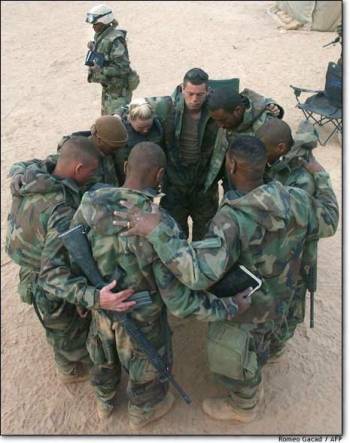
If you look closely at the picture above,
you will note that all the
Marines pictured are bowing their heads. That's because they're praying.
The incident took place at a recent ceremony honoring the birthday of
the corps, and it has the ACLU up in arms. "These are federal
employees," says Lucius Traveler, a spokesman for the ACLU, "on
federal
property and on federal time. For them to pray is clearly an
Establishment of religion, and we must nip this in the bud immediately".
When asked about the ACLU's charges, Colonel Jack Fessender, speaking
for the Commandant of the Corps said (cleaned up a bit), "Screw the
ACLU".
............
Hmmm. Didn't those ACLUers ever hear the part of the Marine Hymn
where the Marines would be in "Heaven's Gate"? The U.S. Marines
have
prayed since the organization was founded. Just what does the ACLU
think we have Chaplains for, anyway?
__________________________________________________________________________
Should the above be true, I must ask if
they are indeed Praying, or rehearsing a game plan in a sport such as football?
I Pray a minimum of 5 times a day. A large majority of
my prayers are on government owned or leased property. In the United
States of North America one cannot own a home due to a property tax. The
only place I pray that is not government owned is in a building set aside for
worship, and is not taxable.
I have abiding questions of what your criterion is for
setting up a religion. Does your organization have tax free ability to be
a religion? When I pray, am I in fact setting up a religion even though I
get no government funding? In the many languages spoken in this sovereign
nation does Freedom of Religion, and Freedom from Religion have the same
meaning? Does the ACLU approve of taking money, or property from those of
us who follow a belief, and faith in some unknown entity? Do you resent
having to take funding or other sustenance from the persons who contribute to
this government? Does your understanding of religion feel that a group
following your definition do wrong by financially supporting The United States
of North America? Does any branch of government have any money?
Does all the money come from the governed?
I will continue to Pray regularly, often continuously,
regardless of where I may be.
Now I question your organizational name.
American? America for the centuries after the Portuguese started slaving
to Brazil only included South America, and Islands of South, and Central
America. Spain referred to the same areas as India. Do you indeed
cover all of America? I doubt it. Your organization can only exist
under a government of laws. Are you civil? Have any of your members
under the age of 50 years ever studied civics? Do you know the definition
of the word "civil"? Liberty? What has your organization
ever accomplished that led to liberty for any one, including your
members? Union? All Religions are by nature a Union, and like you
should never be considered a Labor Union. What do your members refer to
themselves other than a union so dedicated that I construe it to be a
religion? Do any of your members ever wish for good to come to those
outside your organization.
I am not a learned person. I can only read, and try to
understand what is read. This letter comes from the information I received in
which I know not its veracity. Should it be a fact, and you find me in
Prayer in a Library, City, State, or Federal office, or Courtroom please do not
disturb me. This is a plea. I miss understanding a lot because I
started young was involved in World War Two, Korea, and Vietnam. Try to
understand, not be like me. For you know I would take it unkindly on being
disturbed while Praying.
Again
Semper Fidelis
Joshua M. Duncan
Copies to: National ACLU
President of The United States of North America
Senator Edward Kennedy
Senator John Kerry
House member Richard Neal
Massachusetts Governor Mit Romney
File
Message from a
deployed Major in the US Army Date: Thu, 4 Dec 2003 16:37:12 -0500
All: A great Thanksgiving here in the SWA region. POTUS (for those in Rio
Linda)"President of the United States" did the deed. My friends,
that defines leadership right there. More on that at the end, but this man is
the most powerful human on the planet; he could have broke bread anywhere he
wished. He has family as we all do, only he had a CHOICE about where he got his
turkey...and he chose to dine out here.
He dined away from his loved ones, his home! In fact, he didn't dine in
a relatively safe zone, he dined where mortars and rockets are known to fall (I
bet the Q36s were up and running:)) He shared the day as the Commander in Chief
of the US Armed Forces--with his soldiers, sailors, airmen and marines...and
shared the same danger they live with. I cannot think of anything in 22 years
that has done so much for morale anywhere, anytime than this one act. You
should see your forces in the field; the blues of the holiday season are
gone---there is a renewed sense of vigor and commitment at all levels. The
Toughest bastard of a full bird I know had tears in his eyes as we all watched
this visit unfold in our TOC---we all knew what the President just did for us
as leaders---he made getting PVTs Johnny and Joan through this period of
homesick blues a breeze. He literally put a bounce back in a tired army by this
one act.
We were
stunned by his act of unselfish leadership. To those who say he did this for
political gain I say this: You would not recognize leadership when you see it
because it is an alien concept to you. I pity those who will say these things.
No one expected the president to do such a thing...but he knew it was the right
thing to do...and 120,000 Americans far from home know what many others will
never acknowledge: This man did this for us because he cares about us as he
cares about his nation. The gesture came from his heart---and we all were moved
beyond words. The symbolism of this simple act is remarkable in its magnitude. He gave us the highest vote of confidence
and trust just by coming; he brought 280 million thank yous by his very
presence; he flipped our enemies the world-over a big bird in waltzing in to a
combat zone and in doing so he reminded each of us that we are the world's most
powerful armed forces; and he said: I may have ordered you here, but I never
forgot what sacrifices you endure as I make these decisions... And we just
grinned from ear to ear...some for the first time in a year. Joe M.
Ever
grateful for the above
Joshua
M. Duncan CWO Retired
May
16, 2003
The following is a letter from CWO Joshua M. Duncan, U. S. Army, Retired.
Being disabled, my retirement that was a contract with The United States Government
is being used in it's entirety to fund my Service Connected Disabilities.
My feeling is that you are service connected disabled and should leave the
Senate with no retirement pension, but with the award of a service connected
disability
Senator Robert Byrd,
I am a Retired, U. S. Army, Chief Warrant Officer, who served Honorably on
active duty for over twenty years. I challenge your public criticizing and
slandering our Commander in Chief and his visit to a major Iraqi War
participant, the USS Abraham Lincoln, CVN-72, May 2-3, 2003. The
President's visit to that fine ship was a representative symbol of our
Nation's "hand shake, well done, and welcome home" salutation to
every member of our armed forces who served, and continues to serve, in the
Middle East War, not just for personnel of the Abraham Lincoln!
I was making aerial recon. reports to President John F. Kennedy when he paid a
visit during a major Joint Task Force military exercise in the spring of 1962.
There was much elation and joy throughout the entire fleet of some 40 ships
participating in that exercise; everyone was grateful and thankful that OUR
Commander in Chief thought enough of what we were doing to come witness one of
the largest and most complex joint exercises ever conducted by our military.
That visit by President Kennedy is not one bit different from the visit of
President Bush to the USS Abraham Lincoln last week.
I watched your
diatribe on the floor of the U. S. Senate yesterday, May 6, 2003. I initially
hesitated to correspond with you because of heartfelt, intense disgust
with your denigration of our President, and commensurately, our military
forces. After much thought, I consider your
conduct on the Senate floor abhorring and shameful, and deserving of any criticisms
directed your way by any veteran or member of our armed forces. Your party
leadership position on the Senate Armed Services Committee is dubious. Your
conduct on that committee is now tainted
because your defamation of our Commander in Chief will be considered in all
your committee decisions and will be viewed by our military forces as being
guided by a purely partisan, edifying, and self serving agenda, rather than
that which is best for our military.
I believe that you owe an apology to President Bush and to every crew member of
the USS Abraham Lincoln because your tirade on the Senate Floor on May 6, 2003,
did much to malign the faith of many members of this Nation's military
forces in our government. Our military's conduct in this crisis has been
gallant, heroic, and exemplary and deserves the highest
praise and respect. Your degradation of our Commander in Chief certainly does
not show any praise or respect, but sadly places your partisan agenda at a
higher level.
Many of my Military and civilian friends and relatives have corresponded with
me about your conduct on the Senate floor yesterday and have voiced great
displeasure with your obvious pure, personal partisanship. I am being ridiculed
and shamed by them because you are a representative in the Senate. I have lost
much respect for you as an individual because your
conduct does not reflect the dignity of your constituency, especially those of
veterans and the armed forces. You have certainly made a lasting impression on
many of my Military associates and civilian friends, and relatives, especially
those who do not live in your state.
I am ashamed of your representation on my behalf. Your actions demonstrate a
personal, blatant, and obvious HATE for our President. Your partisanship
has been fomenting since President Bush was ELECTED to office and your conduct
in the Senate and public statements of defiance about every thing he has
attempted to do for the past two plus years is nothing short of shameful. Be
assured that I will work feverishly to end your tenure in the U. S. Senate and
to elect a more deserving representative to the office you presently
hold.
Sincerely,
Joshua M. Duncan
CWO, Retired U.S. Army
"America’s
Quality Of Life Is Guaranteed By Our Veterans!"
Greetings All,
This
is happening around the world to our Service People. Let us stop
nit-picking and get our Honor back. Joshua M. Duncan
Merchantman, Marine Corps, AirForce, U. S. Army
Less will die if we do the killing.
Subject: [all-things-US Marines Honoring their dead
Marine killed in Kuwait lauded at Camp Pendleton, by Gregory Alan Gross
UNION-TRIBUNE STAFF WRITER
October 12, 2002
Tony Sledd earned his second stripe this week as a full-fledged Marine
corporal. Sometime next week, he will be buried with it. Even as his
grieving family was calling for his Marine twin brother
to be sent home permanently from Okinawa, Sledd's comrades in arms held a
memorial ceremony at Camp Pendleton yesterday.
Several hundred Marines stood in formation on an athletic field, some in the
traditional forest-pattern camouflage uniform, others in the newer
"digital cammies," as their regiment paid tribute to Sledd.
Sledd, 20, was a lance corporal when he was killed Monday in Kuwait. He
and another Camp Pendleton Marine, Lance Cpl. George R. Simpson, were attacked
by a pair of gunmen firing AK-47 assault rifles from a pickup. Simpson, 21, was
wounded in the arm.
A prayer was said, a litany read, and a martial hymn sung in murmuring, halting
voices. A trumpeter from the 1st Marine Division band played taps. The only
other sounds were the buzz of insects and the muffled booming of artillery
practice in the distant hills. Col. Joe Dowdy, the regimental commander,
remembered Sledd as someone who "declined a life of slothful ease,"
opting instead for "a noble life, a life of service over self."
"We are the men who believe there is a special place on high for our
brothers who have fallen, never to rise," Dowdy said. "Corporal Sledd
was our brother. He has fallen, and we will not forget."
Beside Dowdy at the lectern stood the universal symbol of a U.S. infantryman
lost in combat - an M-16 rifle with its bayonet plunged into the soft
earth. A Kevlar helmet sat atop it, and a pair of
black combat boots stood on the grass below. Behind the colonel, the
wives of Marines from Sledd's 3rd Battalion, 1st Marines - "the
Three-One" - sat beneath a red-and-yellow canopy,
some quietly weeping.
Attached to the 11th Marine Expeditionary Unit, Sledd and Simpson were taking
part in Eager Mace, an annual joint exercise with Kuwaiti forces, as part of
their regular six-month overseas deployment. The two Marines, in the midst of
urban-warfare training on Failaka Island, were armed with blanks. The
gunmen, later identified as Kuwaitis, then tried to ambush another group of
training Marines, but instead ran into a Marine security detail that shot and
killed them. The Kuwaiti government later declared the shooting a
terrorist act and said the two gunmen had ties to al-Qaeda.
Otis Willie
Associate Librarian
The American War Library
The United
States Marine Corps is more than 227 years of romping, stomping death and
destruction.
Marines are the finest fighting force this world has ever known.
As a Marine I was born in a foxhole. My mother is Anger and my father is Pain.
Each moment that I live is a deadly threat upon the life of my country's
enemies.
I'm a rough-looking, tough-talking soldier of the sea, but if you can do it, it
ain't bragging.
I'm cocky, self-centered, overbearing, and I will not know the meaning of fear,
for I am fear itself.
I own the very ground upon which I stand.
I am a green amphibious monster made of blood and guts and know-how, who arose
from the sea to prey upon America's enemies across the globe.
I feed upon anti-Americanism wherever it may arise -- their hatred of me only
makes me grow stronger.
When my time comes, I will die a glorious death on either the battlefield of
combat or the battlefield of life, giving all I am for my God, my country, and
my Corps.
My death will buy my sons and daughters one more generation of freedom.
We live like soldiers, talk like sailors, and slap the crap out of both.
We had the eagle before there was an Air Force, the anchor before there was the
Navy and the rope from ships prior to having the Army.
On the seventh day, while God rested, we overran His perimeter,
"borrowed" the globe, and we've been running the show ever since.
Killer by day, lover by night, Marine By God!
Dear Terrorists,
I am a Naval Aviator. I was born and
raised in a small town in New England. I come from a family of five. I was
raised in a middle class home and taught my values by my mother and
father. My dad worked a series of jobs
in finance and my mom took care of us kids. We were not an overly religious
family but attended church most Sundays. It was a nice small Episcopal Church.
I have a brother and sister and I am the youngest in my family. I was the first
in many generations to attend college.
I have flown Naval aircraft for 16 years.
For me the flying was never a lifelong dream or a "calling," it just
happened. I needed a job and I liked the challenge. I continue to do it today
because I feel it is important to give back to a nation which has given so much
to me. I do it because although I will never be rich, my family will be
comfortable. I do it because many of my
friends have left for the airlines and someone has to do it. My government has spent millions to train me
to fly these multi-million dollar aircraft. I make about 70,000 dollars a year
and after 20 years will be offered a pension.
I like baseball but think the players make too much money. I am in awe
of firemen and policemen and what they do each day for my community, and like
teachers, they just don't get paid enough.
I respect my elders and always use sir or ma'am when addressing a>
stranger. I'm not sure about kids these days but I think that's normal for
every generation. I voted for George
Bush not for his IQ but because I like him. I think I made a pretty good
choice. I tell you all this because
when I come for you, I want you to know me.
I won't be hiding behind a woman or a child. I won't be disguised or
pretending to be something I am not. I will be in a US issue flight suit. I
will be wearing standard US issue flight gear, and I will be flying a navy
aircraft clearly marked as a US warplane. I wish we could meet up close in a
small room where I could wrap my hands around your throat and slowly squeeze
the life out of you but unfortunately you're hiding in a hole in the ground so
we will have to do this a different way.
I want you to know also that I am very good at what I do. I can put a
2,000 lb weapon through a window from 10,000 feet up. I generally only fly at
night so you may want to start sleeping during the day. I am not eager to die
for my country but I am willing to sacrifice my life to protect it from animals
like you. I will do everything in my
power to ensure no civilians are hurt as I take aim at you. My countrymen are a forgiving bunch. Many
are already forgetting what you did on Sept 11th. But I will not forget, and my
President will not forget. I am coming.
I hope you know me a little bit better, see you soon...sleep tight.
Signed..... a US Navy Pilot

I feel the same way. I was brought up poor. Went into 2nd
WW, no desire to go on farm or paper mill. Was fortunate to be taken
off Hip Pocket orders in 1991. Now am 100% disabled, and my military
pension is being used to fund my disability. Sleep tight we will protect
you even as you curse us.
Semper Fidelis
Teklis Sesemar
Veterans’ Salute
http://www.wtv-zone.com/BVD/VetsDay.html
PKVR
The All-American Brand
by Kristine Kirby Webster
The other night I was sitting and knitting, and working mentally on a
presentation I am putting together.
Specifically, I was trying to encapsulate in a few points the hallmarks
of a great brand. I decided that a great brand is enduring, establishes affinity,
and engenders loyalty.
After
mulling over these hallmarks, I found myself wondering what I would consider to
be the Great American Brand. Would it be Sears, the original catalog
powerhouse? All the Ma Bells, the forerunners of telecoms today? Would it be
McDonald's and their ubiquitous arches? How about Coke and their national and
global reach? No. The great American brand, in my eyes, is the United States
Marine Corps.
Now,
I can almost hear many of you saying, "Wait just a minute, Kristine....the
Marines don't sell anything! How can it be the Great American Brand?"
I
admit it. When most people think of branding, they think of it as a part of a
sales plan, one designed to generate profits. But brands needn't be about
sales. As the hallmarks of a great
brand demonstrate, the bond and the relationship created is the most important
goal of a brand. It can't be stated enough: the true promise of a brand is only
realized through the customer-brand experience and the resultant relationship.
The Marines are the smallest of the U.S. military services. But if you were to
gauge size merely by the number of bumper stickers on cars across America, the
Marines would win hands-down as the largest. And the Marines aren't content to
simply rest on their historic laurels. They consistently promote their brand
through multi-channel marketing efforts (both externally and internally) more
precisely and effectively than any other service, and many organizations.
Perhaps
that is why they have numbers such as the following that would make any
for-profit business jump for joy:
* The Marines have consistently met their monthly recruiting goals for more
than seven years running.
* For the Fiscal Year 2003 (which started October 1, 2002), there are 6,100
openings for Marines wishing to re-enlist during this year. As of October 11,
2002, more than 5,100 Marines had requested re-enlistment. At that rate, three weeks into their fiscal
year they would meet their annual goal. (Talk about excellent retention!)
One
of the main functions for success in branding is consistency. The Marines have
had some form of the Eagle, Globe, and Anchor logo since their founding in
1775. The Commandant of the Marine Corps always has the license plates
"1775" on his vehicle. Almost all Marines begin or end all
conversations, correspondence, etc. with "Semper Fi," their motto
("Semper Fidelis," meaning "always faithful"). And, of
course, who can forget the Marine Corps bulldog? All of these symbols combine
to reinforce the brand and serve as markers of loyalty and a sense of
community. In their book, The 22 Immutable Laws of Branding, Al and Laura Ries
note that "if the entire company is the marketing department, then the
entire company is the branding department."
This
is absolutely true of the Corps. Each Marine is a walking, talking
advertisement, and a persuasive one at that. The Marines understand the
importance of their brand--both externally and internally--more than any other
service, and more than most companies. To the Marines, their brand is a living,
breathing, historically-based but constantly evolving thing. Every strong brand
today recognizes that the brand is not a static thing; it needs to be
constantly evolving to meet the needs of their customers, and it needs to be
nurtured and promoted in order to endure. The Marines understand the need to go
out and find those Marines of tomorrow. They are sponsors of such events as the
X Games, NASCAR, NFL Football, and other sporting events that are attractive to
their target audience. They don't just
sit around waiting for candidates; they use the proactive nature of their brand
and message and mission to go out and attract people who want to be Marines.
They promote not only the tangible benefits of the brand--the uniform, the
respect, the ability to serve your nation, and a chance to see the world, but
also the
intangible--the feeling of pride, of belonging to a select group, of aspiring
to be someone great. (Another Marine tag line is "The Few, The Proud, The
Marines.") They also use their proactive nature to "keep" the
Marines who have served in the past. Have you ever heard the oft-said phrase,
"Once A Marine, Always A Marine?" The Marines make great efforts to
retain the affinity and relationship between the Corps and the Marine even after
a person's active service is over. To this end, they have a program called
"Marine for Life." The Marine for Life program's mission "is to
provide sponsorship for our more than 27,000 Marines each year who honorably
leave active service and return to civilian life in order to nurture and
sustain the positive, mutually beneficial relationships inherent in our ethos
'Once A Marine, Always A Marine.'"
The
Marines clearly understand the importance of relationships, longevity, and of
loyalty. Besides being a force to be reckoned with on the battlefield (pun
intended!), they are a force to be reckoned with off it. They have a large
contingent of Marines--past and present--as well as their families, whom they
can rely on to promote the needs and the vision of the Corps, from the halls of
government to the smallest farm communities, from inner cities to Fortune 500
boardrooms. The amazing reach of their message is only superceded by their
consistency of purpose and message.
What
can your brand learn from the Marines?
That consistency is vital, that loyalty is a valuable asset, and that
relationships created in the brand promise and delivered on by the brand
fulfillment are lasting. That treated well, you can create and have customers
for life.
So,
perhaps your brand needs to go to boot camp and learn some brand promotion and
loyalty techniques from the Marines. Is your brand up to the challenge?
Semper Fi,
Gerry Brodeur
He was getting old and
paunchy
And his hair was falling fast,
And he sat around the Legion,
Telling stories of the past.
Of a war that he once fought in
And the deeds that he had done,
In his exploits with his buddies;
They were heroes, every one.
And 'tho sometimes to his neighbors
His tales became a joke,
All his buddies listened quietly
For they knew where of he spoke.
But we'll hear his tales no longer,
For ol' Bob has passed away,
And the world's a little poorer
For a Soldier died today.
He won't be mourned by many,
Just his children and his wife.
For he lived an ordinary,
Very quiet sort of life.
He held a job and raised a family,
Going quietly on his way;
And the world won't note his passing,
'Tho a Soldier died today.
When politicians leave this earth,
Their bodies lie in state,
While thousands note their passing,
And proclaim that they were great.
Papers tell of their life stories
From the time that they were young
But the passing of a Soldier
Goes unnoticed, and unsung.
Is the greatest contribution
To the welfare of our land,
Some jerk who breaks his promise
And cons his fellow man?
Or the ordinary fellow
Who in times of war and strife,
Goes off to serve his country
And offers up his life?
The politician's stipend
And the style in which he lives,
Are often disproportionate,
To the service that he gives.
While the ordinary Soldier,
Who offered up his all,
Is paid off with a medal
And perhaps a pension, small.
It's so easy to forget them,
For it is so many times
That our Bobs and Jims and Johnnys,
Went to battle, but we know,
It is not the politicians
With their compromise and ploys,
Who won for us the freedom
That our country now enjoys.
Should you find yourself in danger,
With your enemies at hand,
Would you really want some cop-out,
With his ever waffling stand?
Or would you want a Soldier--
His home, his country, his kin,
Just a common Soldier,
Who would fight until the end.
He was just a common Soldier,
And his ranks are growing thin,
But his presence should remind us
We may need his like again.
For when countries are in conflict,
We find the Soldier's part
Is to clean up all the troubles
That the politicians start.
If we cannot do him honor
While he's here to hear the praise,
Then at least let's give him homage
At the ending of his days.
Perhaps just a simply headline
In the paper that might say:
"OUR COUNTRY IS IN MOURNING,
A SOLDIER DIED TODAY."
filler
copied from the Marine Corps discussion group.
A.. An armed man is a citizen. An unarmed man is a victim.
B.. A gun in the hand is better than a cop on the phone.
C.. Smith & Wesson: The original point and click interface.
D.. Gun control is not about guns; it's about control.
E.. If guns are outlawed, can we use swords?
F.. If guns cause crime, then pencils cause misspelled words.
G.. Free men do not ask permission to bear arms.
H.. If you don't know your rights you don't have any.
I.. Those who trade liberty for security have neither.
J.. The United States Constitution (c) 1791. All Rights Reserved.
K.. What part of "shall not be infringed" do you not understand?
L.. The Second Amendment is in place in case they ignore the others.
M.. 64,999,987 firearms owners killed no one yesterday.
N.. Guns only have two enemies: Rust and Politicians.
O.. Know guns, know peace and safety. No guns, no peace nor safety.
P.. You don't shoot to kill; you shoot to stay alive.
Q.. 911 - government sponsored Dial-a-Prayer.
R.. Assault is a behavior, not a device.
S.. Criminals love gun control - it makes their jobs safer.
T.. If Guns cause Crime, then Matches cause Arson.
U.. A government thats afraid of it's citizens, tries to control them.
V.. You only have the rights you are willing to fight for.
W.. Enforce the "gun control laws" in place, don't make more.
X ..If you remove the people's right to bear arms, you create slaves.
Y.. The American Revolution wouldn't have happened with Gun Control.
Z.. "...a government by the people, for the people..."
From Josh -
Greetings all,
Our forefathers knew what to do when
attacked. Over the years our government has been taken over by worst than
Terrorist. We are now terrorized on every front by lawyers, acting as
government leaders. They have proven in every recent conflict that they
are followers of a world government that intimidates them. Our three
branches of government laid out by the Constitution is now one entity. We
send our ranking military representative to bargain with a cowardly
France. They have proven themselves cowardly on many occasions. They
have veto? Power in a U. N. made up of backward countries that hate us.
Send the U. N. from our soil. They hatch plans against us in the building
in New York. No other country would allow the treachery done here to
happen on their soil. The Korean war was run by a Russian General in the
U.N. building in New York. France undermined Vietnam through SEATO by
using the French Plantation owners to allow movement of high NVA Officers,
including General Gaip.
Where are the Minute Men, where are the
Patriots, where are the American Citizens? We now are controlled by non
citizens that dictate to our useless Government what our actions are to be.
Let's take our country back. Remove
our "Bastille" leaders in place at this time. Replace them all
according to the original Constitutions, and it's Amendments. This will
mean that none that have attended law school need apply, for this would be a
definite conflict of interest, and lead us back to where we are now.
The following came from the net, and I am
proud to send it on.
For any government to presume
the ability to protect its citizens from this enemy is illogical and asinine.
If we continue to expect that protection, we are fools. In each and every case
of a terrorist's foiled plans, you will not find a government mandate but
rather you will see an individual's resolve. In many cases perhaps, the
individual was a government employee, but the employer did not mandate the
individual's natural sense that something was wrong. I am not talking about
procedure here - I realize that procedures are indeed mandates. However, if
procedure followed resulted in success at stopping terrorists' acts every time,
you could make the case in favor of government dependency. You could also write
off all the past terrorist attacks as bad dreams that never happened. Absent in
those successful attacks was the individual resolve of one person to throw up a
warning sign in time and follow through with a thorough investigation. We've
heard enough hindsight to know this is true. Instead of being productive, this
hindsight is fueling our future disaster if we continue to believe that
government mandates can win the war with the state Of Terror.
Greetings All,
This is happening around the world to our
Service People. Let us stop nit-picking and get our Honor back.
Joshua M. Duncan
Merchantman, Marine Corps, AirForce, U. S. Army
Less will die if we do the killing.
Subject: [all-things-US Marines Honoring their dead
Marine killed in Kuwait lauded at Camp Pendleton, by Gregory Alan Gross
UNION-TRIBUNE STAFF WRITER
October 12, 2002
Tony Sledd earned his second stripe this week as a full-fledged Marine
corporal. Sometime next week, he will be buried with it. Even as his grieving family was calling for
his Marine twin brother
to be sent home permanently from Okinawa, Sledd's comrades in arms held a
memorial ceremony at Camp Pendleton yesterday.
Several hundred
Marines stood in formation on an athletic field, some in the traditional
forest-pattern camouflage uniform, others in the newer "digital
cammies," as their regiment paid tribute to Sledd. Sledd, 20, was a lance corporal when he was
killed Monday in Kuwait. He and another
Camp Pendleton Marine, Lance Cpl. George R. Simpson, were attacked by a pair of
gunmen firing AK-47 assault rifles from a pickup. Simpson, 21, was wounded in
the arm.
A prayer was
said, a litany read, and a martial hymn sung in murmuring, halting voices. A
trumpeter from the 1st Marine Division band played taps. The only other sounds
were the buzz of insects and the muffled booming of artillery practice in the
distant hills. Col. Joe Dowdy, the
regimental commander, remembered Sledd as someone who "declined a life of
slothful ease," opting instead for "a noble life, a life of service
over self."
"We are the
men who believe there is a special place on high for our brothers who have
fallen, never to rise," Dowdy said. "Corporal Sledd was our brother.
He has fallen, and we will not forget."
Beside Dowdy at
the lectern stood the universal symbol of a U.S. infantryman lost in combat -
an M-16 rifle with its bayonet plunged into the soft earth. A Kevlar
helmet sat atop it, and a pair of
black combat boots stood on the grass below.
Behind the colonel, the wives of Marines from Sledd's 3rd Battalion, 1st
Marines - "the Three-One" - sat beneath a red-and-yellow canopy,
some quietly weeping.
Attached to the
11th Marine Expeditionary Unit, Sledd and Simpson were taking part in Eager
Mace, an annual joint exercise with Kuwaiti forces, as part of their regular
six-month overseas deployment. The two Marines, in the midst of urban-warfare
training on Failaka Island, were armed with blanks. The gunmen, later identified as Kuwaitis, then tried to ambush
another group of training Marines, but instead ran into a Marine security detail
that shot and killed them. The Kuwaiti
government later declared the shooting a terrorist act and said the two gunmen
had ties to al-Qaeda.
Otis Willie
Associate Librarian
The American War Library
My feeling also!
Joshua
M. Duncan, D. I. at P. I. 1952
You know, every time I read, see or hear about a Marine being killed, I am
reminded of the days when I recruited them. I promised them three things,
a uniform, a weapon and the knowledge of how to use both - nothing more; no
pay, no chow, no bed - nothing. They always got their guarantee.
But the one thing never discussed and never promised was that they would have a
tomorrow. In this line of work - there simply is no promise of tomorrow. Yet,
we remain.
Semper Fidelis
doug bell
Previously
-
Robert Highland USMC
I was born in Seattle; Washington but enlisted in the U.S. Marine Corps in New
York City on February 26th, 1950 at the age of seventeen and was sent to Parris
Island, S. C. and then upon completion of Boot Camp was sent to Camp Lejeune,
N.C. for Basic Training. In late June of 1950 I was reassigned to the First
Provisional Marine Brigade at Camp Pendleton, CA. I was placed in Easy
Company Second Battalion as a Rifleman. We were trucked out to Tent Camp
#2 for further training along side Dog Company. All we did was fire our weapons
and climb hills attempting to get in better shape for what was coming. We
shipped out in July my having just turned 18 in June, and arrived in Pusan
Korea on Aug. 2nd, 1950 I went into action for the first time on Aug. 7th,
again on the 10th, again on the 17th, at places we called "No Name
Ridge", "Nakton Bulge", hill this and hill that.
Then had to return once again on September 2nd to the River Naktong where the
enemy had broken thru again at the same spot as before, and take it again, once
again handing it over to the Army to hold. We then were sent back aboard
ships, and we sailed to join the First Marine Division for the landing at
Inchon. Having received replacements we were at last a Marine Regiment
with three Companies, we had fought in Pusan against the North Korean Army with
only two Companies. We were given the new title "5th Marine
Regiment, 1st Marine Division FMF . We landed at Inchon on September
15th, we went on to take Ascom City, Kimpo Airfield, Seoul and on North to the
Chosin Reservoir. At the Reservoir on November 27, Th and 28th, of 1950 all
hell broke loose as the Chinese Army hit us with all they had, they came in
Battalion strength time and time again. We were out numbered about 10 to
1, My platoon led by 2nd Lt. Jack Nolan was right in the middle of
their charge, somehow our company held that charge and later it was to be given
the name after our company "Easy Alley". I learned later that
they had 9 enemy Divisions against our one Marine Division, which was spread
out all the way from Yudam-ni south to Koto-ri. During the
breakout of our outfit to Hagaru-ri the 2nd Bn. 5th. Was given the rear
guard and on December 2nd 1950 I was part of a fire team sent up the ridge to
take out a 120 MM Chinese Mortar that was firing down on our only road out from
atop a hill on our left, we took it out of action, I was wounded and for two
days lay in the back of a truck. Unable to move for those two days I suffered
frostbite of the hands and feet. I was evacuated out of Hagaru-ri on
December 4th, by a C-47 to an airfield down south in Yonpo and then to a larger
C-54, which took us to a hospital in Japan. After a short time I was
returned to the United States to the Naval Hospital for repairs and later a
Medical Discharge under Honorable Conditions. . After discharge I became an
owner operator of an 18 Wheeler running the 48 States until forced to retire in
1986. I am married and very happy to a lovely Lady by the name of Maxine,
we have one Son Eric who is in the United States Coast Guard, his Wife Marie
and we have three wonderful Grand Children. I am retired and living in
the Oregon area and a member of the Oregon Chapter of The Chosin Few. I love
Chess, Bluegrass Music and attend the many reunions of the Chosin Few, Brigade,
1st Marine Division and my Company
Easy-2-5. Semper-Fi
Chosine25@Aol.com
http://members.aol.com/nikklduce/memories.html
This
information originated at the above site.
I think it deserves this extra exposure, don’t you?
This
page is dedicated to all men and women who served.
Army Air Force Navy Marines Coast Guard
Staff Sgt. Anita Anderson came home one day and asked me how
to teach her troops patriotism......... I don't have an answer to
that.
I do know that if you
tell your stories they will listen.
OK GUYS I CANT FIND AN AIR FORCE PATCH, ANYONE
GOT ONE?


 In gratitude, I present our first story! Thanks Neil, got a
chuckle outta me :)
In gratitude, I present our first story! Thanks Neil, got a
chuckle outta me :)
The Head - I was on a
anti-personal mine laying detail on the punch bowl. We had planted our mines
out in front of the front line and was getting ready to withdraw back to our
Co. area several miles behind the lines. About this time mortar fire started
coming in, pretty heavy. I guess we had been too brave running around like
nothing was going on. Our Plt. Leader 1st. Lt, Charles Bruggan, decided it
would be best if we had an every man for himself contest and meet on a given
hill back behind the line. It was only a squad of us, about 12 in all, so as
soon as each individual got ready he could go. I was running down the path when
I heard incoming mortar fire so I hit the deck until it subsided, when up and
away I went again. I soon heard some more rounds headed our way. I spotted a
hole not too far away and went for it, headlong, head first and too hell with
the rest. My helmet came off and rolled away making me tuck my head in a little
deeper. This hole had been used for a latrine, Head, slit trench, you name it I
was in it. Fortunately it wasn't to far to the river where I waded in shoes,
clothes and all and had a quick soapless wash off. It only become funny after
the odor wore off and sometimes today I have my doubts.
Neil Sigler AKA Mc1043094
U.S.M.C.R.
Email Neil by clicking
on the link ~~~~~~> Neil Sigler


THE 2ND BATTALION, 5TH MARINE
REGIMENT 1ST MARINE DIVISION KOREA AUGUST 1950 - 1953 BY ROBERT O. HIGHLAND, SGT. USMC
For three years and month,
the 2nd Battalion, 5th Marines have fought in Korea. This Battalion is the most
highly decorated Battalion in the United State Marine Corps to this day.
Landing at the Pusan Perimeter with the 1st
Provisional Marine Brigade on Aug 2nd, 1950, they were entrucked to the western
sector of the Pusan Perimeter. On the 7th of Aug, 2/5 (with only two
companies), "Dog and Easy," received orders to go to the relief of an
Army Battalion where the enemy had broken through their lines. In the hills
above Songyong-ni, Dog and Easy met and defeated the North Korean enemy, and
was the first Marine Battalion seeing action in Korea. Dog company was
particularly hard hit; 143 causalities, with the company Commander, a WIA and
the 3rd platoon leader, a WIA, both evac's. The 1st and 2nd platoon leaders
were KIA. With the enemy in this sector defeated, the 2nd was hastily reformed
and placed at the head of the Brigade column for the southern sweep on Kaosong
and Sachon. The battle of Taedadok Pass was fought in the late afternoon of the
10th of August. Again, 2/5 was hard hit, sixty-two causalities were taken and
the Battalion Executive officer was to die of wounds. Enemy resistance was
broken and 3/5 moved through and occupied Kasong the next day.
In the meantime, the North Korean enemy had
crossed the Naktong River and forced a deep salient in the Army lines. The
Marine Brigade was hastily withdrawn from the outskirts of Sachon and was
rushed to the northern perimeter. Once again, 2/5 was selected to lead the
assault on a "No Name Ridge." At 0800 on the morning of the 17th of Aug. with Dog to the right of Easy,
the battle of the Naktong Bulge began. In an assault that Life magazine
compared with Pickett's charge at Gettysburg, the 2nd fought to the crest only
to be driven back by the enemy's flanking fire. 2/5 reformed for a second
attack and once again the crest was reached. In three hours,"Dog and
Easy" suffered 142 causalities. The Dog Company Commander was WIA Evac.
With the enemy defenses blunted, 1/5 took over and later moved in and the enemy
was driven into the Naktong River to the northern side. Of the 5th Marines,
President Syngman Rhee said, "You brought hope to my people and victory
when all we had known was defeat." Two weeks later, the 5th Marines were
back at the Naktong, at the same place as the 1st assault where they had turned
the line over to the Army. Once again the North Koreans pushed across a deep salient
in the Army lines. With 2/5 and 1/5 abreast, the second battle of the Naktong
began. In a whirlwind campaign with superb close support from the Marine Air,
the enemy was once again routed. The North Korean Army captured prisoners now
gave the Marines the name of "Yellow Legs" because of the yellow
leggings they wore, and they wanted no part of these new Soldiers who ever they
were. The Seawall at Inchon
was scaled by 2/5 as darkness came on September 15th and Inchon was secured.
The push inland began on the 17th Dog Company and Cpl. Oakie Douglas and his
2.36 Rocket Launcher destroyed six T-34 Tanks along with 200 enemy dead, and
only one Marine was wounded in that action. The enemy had been taken completely
by surprise. The attack toward Kimpo Airfield continued. With Fox, Dog, and
Easy moving forward rapidly, Kimpo was captured and held against a strong night
counter attack. The Han River Crossing
was made by the 5th Marines with 3/5 in the advance and the assault on Seoul
City began. The attack slowed and 2/5 was ordered forward to capture the key
hills, #88, 105, and 104. Fox took 104; Dog Company, in one of the most
devastating attacks of the "Korean War" captured hill # 88. Only 26
Marines of Dog Company reached the top: the Company Commander was KIA, it was
to be named after him, "Smiths Ridge." Easy took hill 105 and the
western defenses of Seoul were laid bare. Eleven days after Inchon, 2/5 was in
Seoul. Retracting and
boarding a ship, 2/5 landed at Wonsan on the 27th of October. The long move north
to the Chosin Reservoir began. The 7th Marines, fresh and nearly casualty free
from the landing at Inchon, led the move northward. 2/5 moved into position at
Yudam-ni and was ordered to move through the 7th Marines and lead the attack
westward. This was on the 26th of November 1950. Easy company took the lead and
before long heavy resistance was met, Dog and Fox moved up. Orders came down to
dig in and hold. That night the Chinese attack struck, Easy was hit hard but
their line held; Fox company flank was penetrated but a counter attack by Dog
Company in reserve sealed off the danger. With daylight 2/5's lines were
intact. Through the following days of brutal fighting, 2/5 never had their
lines breached. Easy's stand in the center of the charge was to bring about the
name "Easy Alley." Easy and Fox with Dog Company in the lead covered
the withdrawal of 3/5 from the Yudam-ni Valley. 2/5 fought as the rear guard
for the 5th and 7th to Hagaru-ri arriving on the 4th of December with its dead
and wounded. FOX 3-7 HELD TOKTONG PASS The door to Hagaru-ri was open. At Hagaru-ri plans were laid for the fight to the South, the 7th would
lead the attack, the 5th would again fight the rear guard. 2/5 was assigned the
mission of capturing a hill northeast of Hagaru-ri which commanded the
evacuation route. The hill called "East Hill" for those who took it
was known as their toughest fight in Korea. Dog made the assault with Fox on
the flank. Heavy fighting ensued, the CO of the 5th told his men, "We will
leave here as Marines, we will come out fighting." Easy came into the
battle and the high ground was taken and the road was open to the South. 2/5
suffered 118 causalities, among them, Gunnery Sergeant, "Swede"
Larsen who had become a legendary fighting figure in the 2nd Battalion. The 2nd
held its positions, destroyed the bridge and burned Hagaru-ri before taking the
frozen road south to Koto-ri. After the Chosine Reservoir Campaign, 2/5 regrouped and trained in the Masan
area. In February of 1951. The X Corps Commander cited the 5th by the following
message. "Today I made an aerial reconnaissance of the near impossible
mountain peaks east of Taem-san captured by the Fifth Marines. I have nothing
but admiration for the dauntless men that scaled those peaks and now remain as
their assigned objectives." As usual, 2/5 was in the forefront of the Hwachon battle and Fox and Dog secured
the final objective. From July 1951 to August 29, 1951, Easy 2/5 with the 1st
and 7th Marines went into reserve. August and September found the Marines in
the Punchbowl sector with the 1st and 2nd engaged in the battle of the Hook.
Another winter passed and with the spring came
the severest test to be faced by 2/5. The Carson, Reno, Vegas battles. The 2nd
was in reserve when Reno was lost and Vegas over ran. 2/5 moved into counter
attack. With Dog and Easy, and Fox, and also a Weapons company fighting as a
team, Carson was saved and Vegas retaken. Elements of the 2nd Battalion Marines
re-enforced the efforts at various times. 2/5 suffered 436 casualties in less
then sixty-two hours, with the Fox Company Commander and the Battalion S-3 both
killed. Once again as always the assigned objective was taken. By the way,
Vegas was also the first battle for "Reckless." (The Marines best
Friend). After a short time in reserve, the Marines returned to the line and
the 2/5 was in a fighting position when the truce was signed. This brief
history speaks for itself, the men of 2/5 may take their rightful places along
side our renowned and legendary Brothers of Saison's Chateau Thierry,
Guadacanal and Okinawa. I now let my brother Marine whom ever he shall be
continue with what has happened until the present time.
End of Story
The following was written by an unknown captain
in VIETNAM. If you are unable to
save them a place inside of you, and save one backwards glance when you are
leaving for the places they can no longer go, be not ashamed to say you loved
them, though you may not have always. Take what they left and what they
have taught you with their dying and keep it with your own. And in that time
when men decide and feel safe to call the war insane, take one moment to
remember, to embrace those gentle heroes I left behind.
Email Robert for this
wonderful contribution by clicking on the link


Navy
Corpsman - We unloaded from the troop
ship in Frisco and 7 of us Corpsmen went to Treasure Island for discharge. The
damn "feather merchants" there didn't know what to do with Navy guys
wearing Marine uniforms. Every time we tried to get processed out, the Swabbies
would mumble something about the damn Marines ought to go to Camp Pendleton!!
One day we tried to go on liberty in our summer khaki. The Master at Arms
wouldn't give us liberty cards because we didn't have jackets on. We finally
found a Navy officer who knew a little bit and told the MA that Marine khaki uniforms didn't have jackets!! It took so frigging long for those
goofs to figure out that we were actually in the Navy that I
finally got out of there on 4 Oct 1951 and got back to Oregon one day too late to register
for college and play my last year of football eligibility. Had only two
quarters left to graduate. Even the coach couldn't get the
registrar to make an exception. Had to get on with my life so I
finished college in Winter and Spring quarters, graduating in June of 1952. Maybe that's why I'm not on the
roster. The Marines couldn't figure out what to do with Navy guys. Sort
of like being under arms without a service -- feel a little like a mercenary. Glenn B
Schroeder Email Glenn by clicking on the link ~~~~~> Glenn 
Da Plane! - So much of war is of hardship, sadness , that I would like to
tell my story of a bit of humor. I was a pilot in the 83rd TCS stationed at
Brady Field Kyushu Japan in 1951 We were known as the southern Kyushu airlines,
you call, we haul you-all flying the old Curtis Commando C-46. Many of our
missions were courier type, hauling mail, passengers, to various bases in Japan
and Korea. This particular mission started out in bad weather and didn’t seem
to improve as it went on. On our very first stop at Itazuke AFB we had to land
in a severe cross-wind which in a C-46 was a challenge at best. After getting
on the ground and getting parked I proceeded into base operations to file
clearance to our next base. About 15 minutes later the ops officer called me
and said Lt.. That’s sure a funny looking C-46 you've got there. I proceeded
out the door and much to my dismay there is my airplane with its tail in
drainage ditch, which was about 20' wide and 6-8' deep. Needless to say the
last part of the airplane was NOT in a flyable condition. The plane had been
chocked but the gusty winds had picked up one wheel rolled the plane back about
50 ft., where? Right into the drainage ditch tail first. To make a long story
short, as aircraft commander to the best of my knowledge, I was the only pilot
ever credited with the destruction of an airplane and I wasn’t even in it.
Naturally everybody was saying Dutch 4 more and you will be an ace. I'm still
reminded of this incident at our reunions almost 50 yrs later.
Major Deutscher USAF (ret)
Fighting words for Monica's Bill
Former Pres Clintom, in a SHAMELESS bid for applause at a Jewish fund raiser
last week said "I would grab a rifle and get in the trench and fight and
die (for Israel)"
My advice to the Vietnam draft dodger...How about heading to Afghanistan, picking
up a rifle, and getting in the trenches to fight and die for the country you
didn’t pick up a rifle for during the Vietnam war??????
Will all the Clinton lovers answer that one??
I was a rifleman in Dog Company, 2nd Battalion 5th Marines, 1st Provisional
Marine Brigade, and never missed a firefight, or battle from August 2. 1950
until 18 December 1950. If you read the information that proceeded the
part about our cowardly insult to the leadership of the United States of
America, who was trying to become the first leader of the World United.
Who has not yet given up his dream, and you still love him, give him a
rifle. He will only need one round of ammunition so that he can shoot his
cowardly self.
Should any
one doubt that I have earned the privilege of the above statement, you really
do deserve a World Government.
Written with pride
Joshua M. Duncan 1087527 D-2-5
Contributors with similar
stories from our veterans or websites where such stories exist will always be
welcome here! Deb V
Home Rant
Page Send Josh Feedback with the link
provided at the top!